






Whose Hands Hold Your Attention? A Story of the Algorithm of the Oppressed
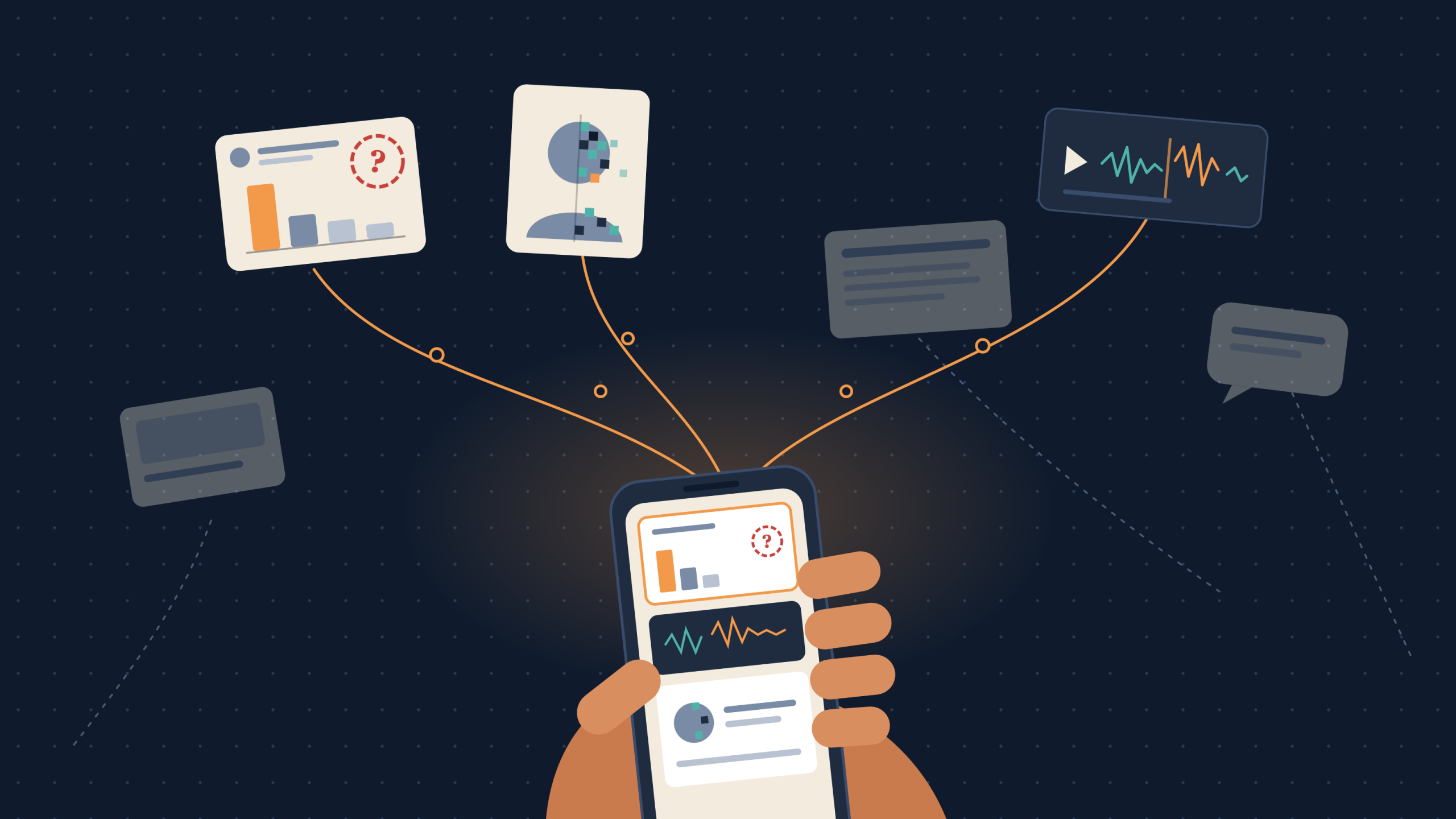
Bias, personalisation and AI fakes are not three separate problems. What they share, and what that means for information integrity in the Western Balkans.
By Vuk Vuković, producer and Associate Professor of Film and Media, University of Montenegro
This post builds on the talk “Information Integrity in a Shifting Global Environment: The Western Balkans Context”, given at the METACOG webinar “In Noise We Trust? AI, Disinformation, and Democracy across Europe” on 30 October 2026. Part of the text was originally published within the Media Literacy project of the Agency for Audiovisual Media Services of Montenegro.
Picture an evening a few days before a local election. A screenshot lands in a family chat: a fresh opinion poll, stamped with the logo of a well-known polling agency, showing one list far ahead of the rest. By morning it has been shared hundreds of times. The agency never conducted it.
This is not an invented genre. Montenegrin fact-checkers at Raskrinkavanje.me describe fabricated polls as the most prominent tactic of political disinformation in the country. They appear on party-controlled social media pages, borrow the names of real polling agencies, and travel onward through web portals that treat unverified accounts as sources.
The poll is fake. But the path it travels, from page to feed to screen, is shaped by something very real: the systems that decide what each of us gets to see. That is where this story begins.
Words that name an era
After reading Todor Kuljić’s sociological study Prognani pojmovi (Exiled Concepts, 2018), I started thinking hard about the concepts that define contemporary society, especially those that help us see inequality. To paraphrase Kuljić: how do we recognise the social conditions under which historical and contemporary experience is given new names?
One rough indicator is the “word of the year” that dictionaries and linguists choose each December: brain rot (Oxford, 2024); AI (Collins, 2023) and hallucinate (Cambridge, 2023); doomscrolling (Macquarie, 2020); cancel culture (Macquarie, 2019); sharing economy (Oxford shortlist, 2015); #blacklivesmatter (American Dialect Society, 2014).
This is an ad hoc sample, not a study. Still, the pattern is hard to miss. The words we reach for to name our experience come, again and again, from digital media culture. Reduce the list to one common denominator and you find a quiet ruler behind all of them: His Majesty the Algorithm.
The time of the algorithm
The word itself is old. It comes from the Latinised name of the ninth-century Persian mathematician al-Khwarizmi, and for most of its history it belonged to mathematics: a precisely defined sequence of steps for solving a problem.
Over time, the concept migrated into the social sciences and humanities, especially the digital humanities. Steps that look neutral on paper began making decisions about people: what they read, which job ads they see, whether a court treats them as a risk. That is where the trouble starts. It is also where media literacy faces its most interesting task, joining the rigour of STEM with the critical reflection of the social sciences. Out of that meeting came a set of ethical dilemmas and a concept that we translate rather clumsily into our languages: algorithmic bias.
How do algorithms choose for us?
Algorithmic personalisation, the automated selection of content tailored to each user, has defined the last two decades, and the social media era above all. Google introduced personalised search in 2004. In December 2009 it extended it to everyone, including people who were not signed in, using an anonymous browser cookie that kept up to 180 days of search activity. Platforms such as Facebook, Instagram and TikTok then raced to offer the “better” algorithm.
What counts as better? Largely, whatever keeps us engaged. The longer we stay, the more ads we see: this is the logic of the attention economy. But engagement is not the same as quality, accuracy or wellbeing. When it becomes the main yardstick, what we see risks being chosen by commercial interest rather than human need.
To be fair, personalisation was also an answer to a real problem: abundance. By one widely cited Statista estimate, the world now creates, captures, copies or consumes roughly 400 million terabytes of data every day. Nobody can sift that alone. The early promise was that platforms would filter on our behalf while we kept control of the filter. In practice, control over both the selection and the data we hand over, willingly or not, sits largely with a handful of large companies.
How much does this shape what we believe? Here we must be careful, because hype about algorithms can itself become misinformation. After 2018, many people came to believe that Cambridge Analytica’s data harvesting had swung the Brexit referendum. Yet the UK Information Commissioner’s three-year investigation concluded in 2020 that the firm was not involved in the referendum campaign beyond initial enquiries, and that the harvested Facebook data concerned US voters. The data-misuse scandal was real. The story of an algorithm that “decided” Brexit was not supported by the evidence.
The best experimental evidence points the same way. In large studies run with Meta during the 2020 US election, researchers moved some users from algorithmic to chronological feeds. What people saw changed a lot; surprisingly, the chronological feed showed them more political and untrustworthy content, not less. Yet their political attitudes and polarisation did not measurably change over three months. Algorithms clearly shape exposure. Whether, and how far, they shape belief is a harder question. Keeping those two apart is where AI literacy begins.
When algorithms become unfair
The dark side of the algorithm is not only about personalised feeds and harvested data. It is also about systematic, repeated “errors” that nobody in particular intends: unfair outcomes that an automated system produces again and again, favouring one group over another. Such discrimination need not serve anyone’s profit. But it shows that algorithms are not neutral. Bias can enter through the design, through the training data, or through the way a system is used. The scholar Safiya Umoja Noble gave the phenomenon a lasting name in her book Algorithms of Oppression (2018).
Some well-documented cases:
- Images. In 2015 Google Photos labelled photos of Black people as gorillas, and Google apologised. Its fix was to block the label. Eight years later, a New York Times test found that Google Photos still could not find gorillas at all, and Apple’s photo app showed the same gap. The problem was not solved; it was hidden behind an apparent neutrality.
- Justice. COMPAS is a risk-assessment tool used by courts in parts of the US. In 2016 ProPublica analysed records of more than 10,000 defendants in Broward County, Florida. Black defendants who did not reoffend were almost twice as likely as white defendants to be wrongly rated higher risk (45% vs 23%). White defendants who did reoffend were more often wrongly rated low risk (48% vs 28%). The tool’s maker replied that its scores were equally accurate for both groups. Both claims can be true at once: when two groups reoffend at different rates, no imperfect score can meet both definitions of fairness. Choosing between them is a moral and political decision, not a technical one.
- Hiring. Amazon built an experimental tool to rank job applicants, trained on ten years of CVs submitted mostly by men. It learned to penalise CVs containing the word “women’s”, as in “women’s chess club captain”, and to downgrade graduates of two all-women colleges. Amazon disbanded the team and said the tool was never used by its recruiters to evaluate candidates.
- Advertising. A 2019 study found that Facebook’s ad delivery skewed job and housing ads along gender and racial lines, even when advertisers chose neutral targeting. The platform’s own optimisation, not the advertiser, did the sorting.
Not every suspicion holds up, and that matters too. In 2019, viral complaints accused the Apple Card’s credit algorithm of giving women lower limits. New York’s financial regulator examined data on about 400,000 applicants and in 2021 found no unlawful discrimination, while criticising a lack of transparency that had undermined trust. Opacity breeds suspicion even where bias is not proven.
Rules are catching up, unevenly
Although these cases have long been treated in academia as scientific and ethical problems, regulation is slow to catch up with technology. In 2022 the White House published a non-binding Blueprint for an AI Bill of Rights, whose five principles included protection against algorithmic discrimination. Since January 2025 it has lived in the archive of the previous administration, as US federal policy changed direction.
The EU has gone further, through the General Data Protection Regulation (GDPR), the Digital Services Act (DSA), which obliges the largest platforms to assess and reduce systemic risks, including to elections and public debate, and the AI Act. Since 2 August 2026 the AI Act has required that deepfakes be disclosed as artificially generated or manipulated.
These rules do not apply directly in candidate countries. Montenegro and its neighbours are expected to align with them on the road to EU membership, and civil-society monitors reported in mid-2025 that Montenegro had not yet begun preparing to implement the DSA. Citizens of the region share the same digital space as EU citizens, but not the same protections.
The Western Balkans: thin trust, cheap fakes
Why does this matter so much here? Disinformation feeds on low trust, and the Western Balkans has long sat near the bottom of the Media Literacy Index published by the Open Society Institute – Sofia. The index does not test anyone’s skills. It combines predictors of resilience: quality of education, media freedom, trust between people and online civic participation. In the latest edition Montenegro reached its best result yet, 26th place with 44 points (up from 33rd in 2023), though still below the European average. Serbia was 32nd, Bosnia and Herzegovina 37th, Albania and North Macedonia 39th and 40th, and Kosovo last.
Fact-checkers document how this vulnerability is used. Besides fake polls, Raskrinkavanje.me reports that web portals remain a main source of political disinformation in Montenegro, alongside scam ads falsely announcing the death of well-known activists or politicians to lure readers to dubious cryptocurrency sites. Polls it cites suggest that roughly one citizen in five believes a piece of disinformation at least once a week, and close to 70% see disinformation as a problem.
Generative AI has made such fakes cheaper. Montenegro’s national computer incident response team, CIRT, told BIRN that misuse of public figures’ faces and voices has grown fastest since 2022, when AI tools became widely accessible. Deepfake videos of a Montenegrin MP who is also a surgeon, for example, “recommended” dubious remedies in Facebook and Instagram ads. According to figures cited by BIRN, reported deepfake incidents in the first three months of 2025 exceeded the total for the whole of 2024, with public figures targeted in more than half of the cases.
In Slovakia, a METACOG partner country, the stakes were political. Two days before the 2023 parliamentary election, during the pre-election silence, an AI-generated audio clip circulated in which the leader of a pro-European party and a prominent journalist appeared to discuss rigging the vote. It was debunked, but kept spreading. Did it change the result? Researchers writing in the Harvard Kennedy School Misinformation Review caution that there is no evidence it did. The deeper problem, they argue, was the very low trust in government and media that made such a clip believable. Deepfakes do the most damage where trust is already thin.
AI against AI
AI is not only part of the problem. Fact-checkers increasingly use it to keep pace. Full Fact’s AI tools, for instance, are used by more than 40 fact-checking organisations in 30 countries to monitor media and to spot when an already debunked claim resurfaces in new words. The best of these tools assist human judgement rather than replace it.
Meanwhile the global environment is shifting. In 2025 Meta ended its third-party fact-checking programme in the United States and replaced it with crowd-sourced Community Notes, saying the programme would stay in place elsewhere for now. In the Western Balkans, where independent fact-checkers partner with Meta while also facing threats and insults at home, a decision taken in California can reshape local information integrity overnight.
The same tension runs through chatbots. Cambridge Dictionary’s 2023 word of the year, hallucinate, names generative AI’s tendency to produce confident falsehoods. A tool that can help you check a claim can also invent one.
Six habits for the age of the algorithm
- Pause when you feel a jolt. Outrage, fear and triumph are what engagement-driven feeds reward. A strong emotional reaction is a signal to slow down before you share.
- Check the source, not the logo. A poll with an agency’s logo is only a claim. Look for it on the agency’s own website or in established media before you believe it.
- Treat audio and video as claims, not proof. A convincing voice is now cheap to fake. Ask who published it first, and whether the person or their official channels confirm it.
- Ask “Why am I seeing this?” Use the platforms’ ad explanations and public ad libraries, and switch to a chronological or “following” feed now and then to see what the algorithm was choosing for you.
- Use AI as an assistant, not an oracle. Chatbots can hallucinate. Ask for sources, then open them yourself.
- Know your fact-checkers, and report fakes. In Montenegro, Raskrinkavanje.me; across the region, the SEE Check network. Report deepfake scam ads to the platform and, where fraud is involved, to the authorities.
Exposing the illusion of neutrality
What these examples show is that technology, although born of the exact sciences, is not neutral. It reflects and amplifies the society that builds it. Algorithmic bias is, in that sense, discrimination that has existed for decades and centuries, on every ground (sex, gender, class, sexuality, race and more), now digitised. Digitised, it is no longer only a matter of time but also of space: it spreads through all our media, which Marshall McLuhan famously described as extensions of our senses.
That makes it more dangerous, not less. Because we assume that computer decisions are objective and exact, we grant them a trust they have not earned, and their bias becomes harder to see. Fakes work the same way: a poll with a logo, a voice that sounds right, a feed that seems to show “everything” all borrow an authority they do not have.
Exposing that apparent neutrality is a task for all of us, every day and everywhere. Not only so that AI systems become fairer, more transparent and safer, but so that our shared information space stays worth trusting. Perhaps then, at least in digital society, discrimination will become one of Kuljić’s exiled concepts.
About METACOG
METACOG is an EU-funded AI literacy programme designed to combat disinformation and fake news by promoting civic engagement and shared European values.
The initiative aims to strengthen citizens’ ability—particularly among higher education students and teachers— to recognize and respond to disinformation through an innovative curriculum, AI-based tools, and best practices.
By acknowledging the dual role of artificial intelligence in both generating and countering disinformation, METACOG seeks to empower individuals with the critical thinking and digital literacy skills essential for navigating today’s information landscape.
Targeting higher education institutions, government and non-governmental organizations, media professionals, and the general public, METACOG is led by Haaga-Helia University of Applied Sciences (Finland) in collaboration with the Technical University of Košice (Slovakia), the University of Montenegro (Montenegro), and The Hague University of Applied Sciences (The Netherlands). The project is funded under the Erasmus+ Programme (KA220-HED) and will run from 1 September 2024 to 31 August 2027.