


Innovation Hub of Socio-Ecological Sustainability
Sustainably into the future: Shaping societal change together
The focus of this hub is to address global challenges with a particular emphasis on perspectives and approaches from Social Sciences and Humanities

About this hub
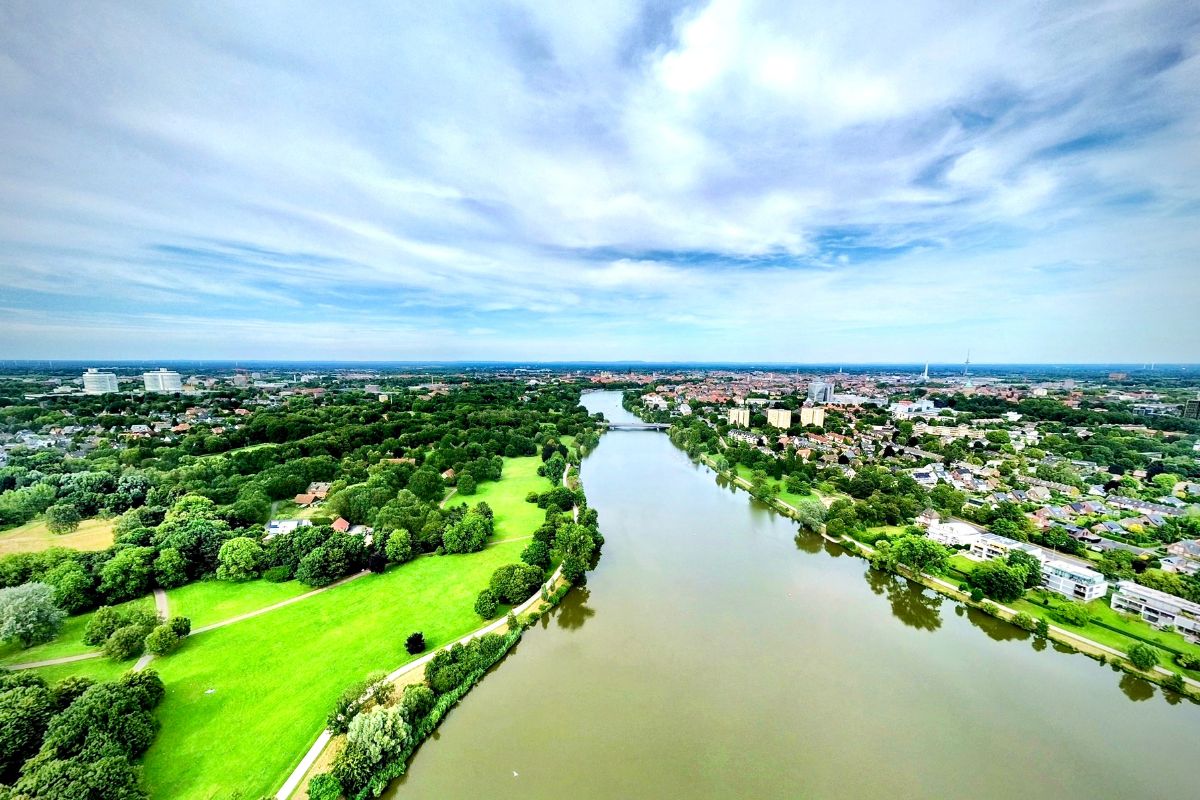
Located at the University of Münster, in the Münsterland region, North Rhine-Westphalia (Germany, Europe, Planet Earth).
This hub makes an important contribution to the development of innovative ideas and solutions for the pursuit of sustainable human and planetary wellbeing by addressing global challenges such as climate change, biodiversity loss, energy transition, issues of peace and democracy and shaping a good life for all.
It focuses on inter- and transdisciplinary formats in research, teaching and transfer/innovation and places a special emphasis on social innovations and transformative approaches to sustainability research and practice.
Thematic areas
- Shaping & Exploring Sustainability
- Inter- & Transdisciplinarity
- Socio-Ecological Transformation & Societal Change
- Co-Creation & Real-World Lab Design
- Food & Agroecology
- Water & Circular Systems
- Transformative Education & Futurabilities
Objectives
With its focus on sustainable development, the Innovation Hub on socio-ecological sustainability at the University of Münster is dedicated to a central challenge of our time that requires comprehensive societal change.
Primarily ecological issues such as the climate crisis, species extinction and other planetary boundaries cannot be separated from primarily social issues such as (energy) transition, peace, democracy and justice.
As the crises are complex and globally interconnected, the solutions must also take this into account. Innovative strategies and ideas that enable societies to overcome the socio-ecological challenges of the present are urgently needed. In order to develop these, interdisciplinary and transdisciplinary approaches and a deep integration and interlinking of social and natural science contributions to sustainability research and practice are required.
The aim of the Innovation Hub in Münster is to analyze, discuss and respond to the diverse requirements for viable solutions to upcoming sustainability challenges.
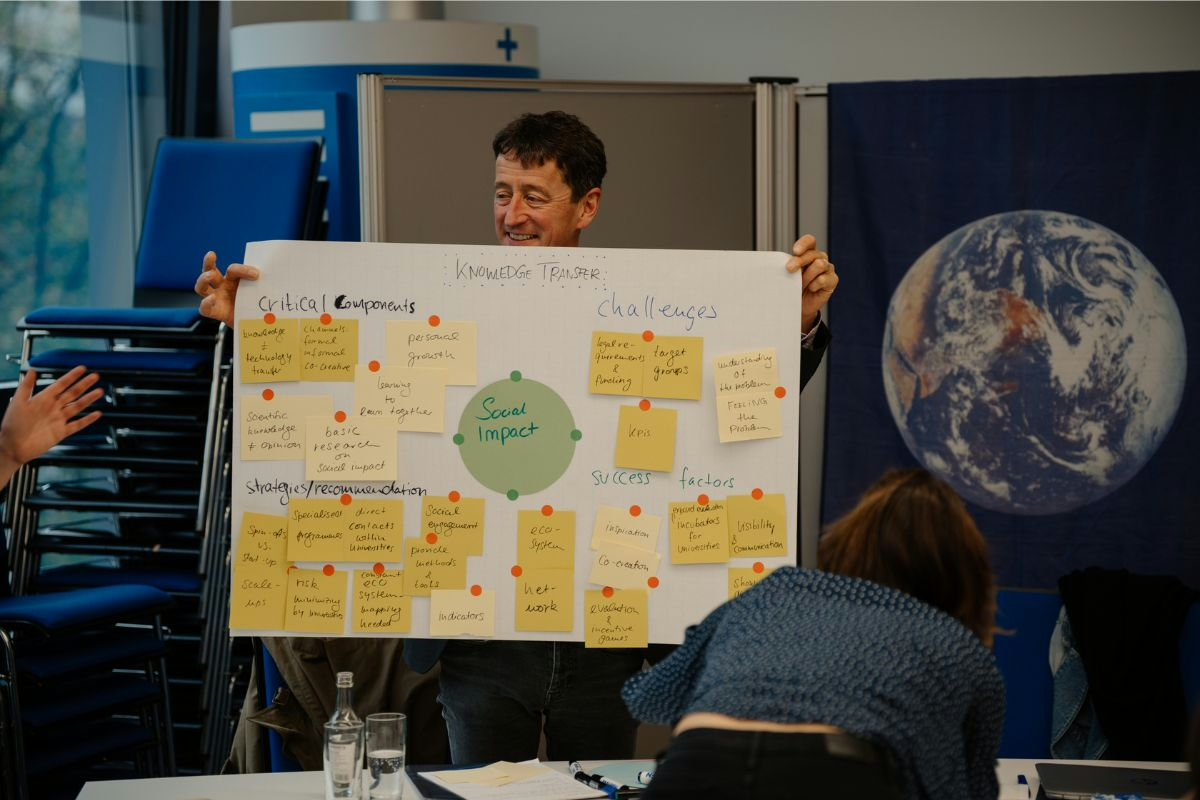
Photo: Gessa Niessen
Our approach
What do we mean by socio-ecological sustainability?
- Considering and safeguarding human need satisfaction and the good life for all, everywhere, now and in the future.
- Considering and safeguarding biophysical systems and living conditions (across the species-divide) and staying within planetary boundaries.
- Recognizing the urgency of transition to low-carbon societies in the face of widespread, rapid, and intensifying climate and polycrisis.
What starting points guide us?
- Researching diverse relationships and dynamics witin human-nature-relations / more-than-human ecologies.
- Researching how societies can provide for (human) wellbeing while severely lessening environmental harm and strengthening regenerative capacities.
- Researching transformational pathways that include mitigation and adaptation strategies with the overall aim to enhance wellbeing while keeping within the 1.5° and planetary boundaries.
How does our Innovation Hub want to contribute to this?
- Bridging Social Sciences / Humanities and Natural Sciences by generating interdisciplinary exchange formats and research groups.
- Providing & producing normative & ethical assessments and evaluative criteria for sustainability challenges.
- Emphasizing a transdisciplinary orientation through citizen science, outreach activities, and co-creation processes, encouraging (self-)education and authentic encounters.
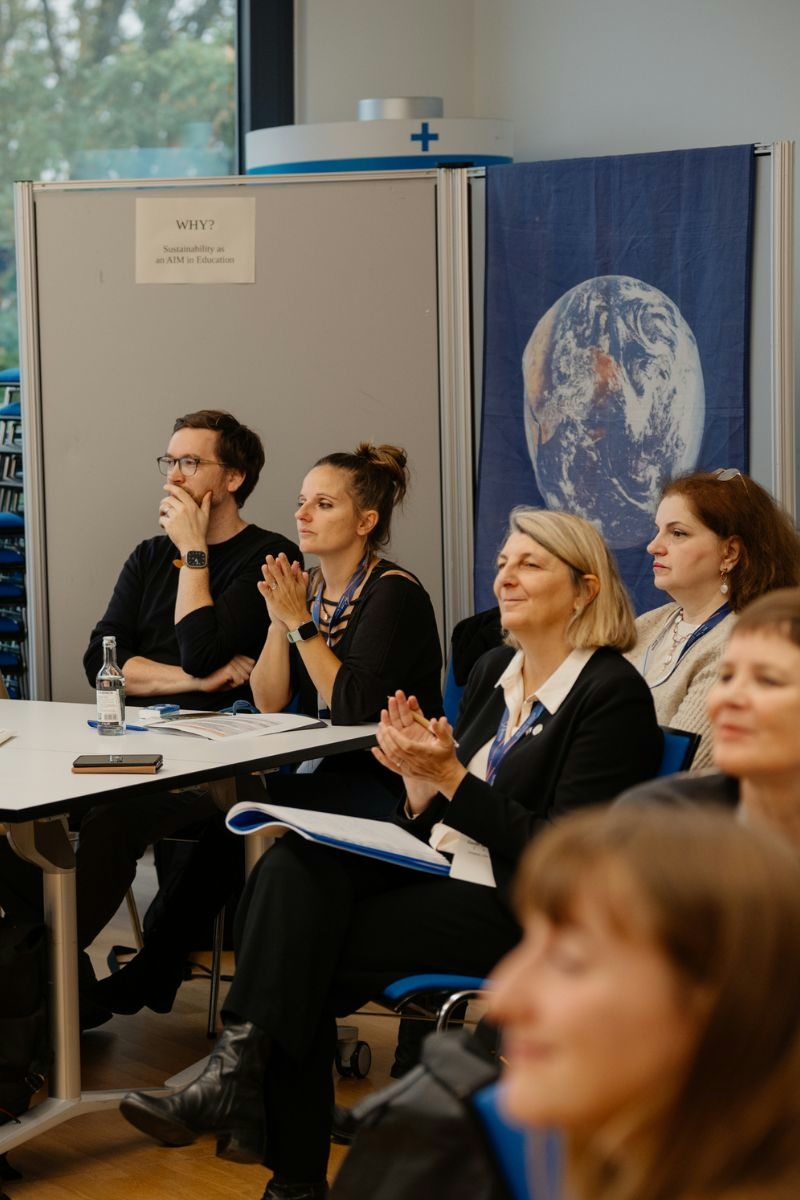
Photo: Gessa Niessen
Structure, Elements & Fields of Action

The Innovation Hub on Socio-Ecological Sustainability is based at the Center for Interdisciplinary Sustainability Research (ZIN) at the University of Münster and acts as an interlinking junction between sustainability actors from the university, the city of Münster, the Münsterland region and the European University Network Ulysseus.
The Innovation Hub links their sustainability activities in the areas of education, research and transfer/innovation. The following illustration explains the basic elements of the Innovation Hub, which are assigned to this university fields of action or represent cross-sectional, transversal elements.
The Innovation Hub team connects stakeholders, facilitates exchange and transfer, designs courses, assists with matchmaking, and takes part in research groups and projects. A key aspect is identifying, creating, and utilising synergies in all fields of action.

Education
In the field of education various formats on sustainability issues such as Sustainable Design Thinking, Green Skills and Sustainability & Green Transition are developed and implemented at the Innovation Hub. In addition to various Joint Courses for students, Open Classes offer a publicly accessible educational program and various training courses and workshops provide further education and training for different target groups within and outside the Ulysseus network. A Teaching Innovation Lab supports the design and development of teaching programs in the spirit of transformative education.
Research
In the field of research, the Innovation Hub supports the development of the emerging field „Exploring and Shaping Sustainability“, which is part of the „Sustainable Futures“ impact area in the university’s research profile and provides a framework for bundling research activities. The Center for Interdisciplinary Sustainability Research (ZIN) is the Research Center where thematic research groups on the focal points of the Innovation Hub are set up and research projects are developed and applied for.
Ulysseus promotes the establishment of Joint Research & Innovation Groups in the network, that work on issues that are related to the Innovation Hubs. The Innovation Hub on Socio-Ecological Sustainability supports R&I Groups in the this thematic field, especially on co-creation & real-world labs, food & agroecology, water & circular systems and futurabilities & transformative education.

Transfer & Innovation
‘Living labs’ and ‘Real-world Laboratories’ are a specialty of the Münster IH ecosystem and formats, that bridge all three fields of action, create transfer into society and foster sustainable transformation. In sustainability science, living labs are designed as transdisciplinary and transformative research and development facilities in which various stakeholders from science and civil society learn together and from each other and work together on sustainable solutions. Innovative ideas, transformation approaches and new social practices are tested and researched in experimental settings.
The REACH – Euregio Start-up Center acts as the Start-up Incubator and transfer facility. The promotion and interconnection of start-ups and spin-offs is realised in particular through a coach-the-coach program and various workshops on women*, social and intersectional entrepreneurship, innovation skills & capacities and know-how for start-up teams.
Transversal Elements
Several elements lie across the fields of action or connect with their activities in all three areas. In this Ulysseus project phase there is a special emphasis on Open Science as well as on Culture & Creativity.
The Münster Center for Open Science (MüCOS) serves as an institutional service point for open access practices and supports the free accessibility of materials and data produced in the areas of research, teaching and transfer, in particular open access publications, open educational resources and open data. It fosters Open Science as a sustainable practice and part of a sustainability culture in a whole institution approach.
The transversal element ‘Culture & Creativity’ aims to incorporate the creative potential that exists in the dialog and interaction of art and culture with science, research and teaching and is integrated into different activities of the Innovation Hub.



Associated Partners
Socio-ecological Partners
Associated Partners are regional and local authorities, businesses, and citizens who participate and contribute to both the Ulysseus long-term mission and to our regional development and to shape the future of the European Higher Education. They are involved in the co-creation and design thinking processes, in the plans and structures and in the programs of activities of Ulysseus.
Discover the Associated Partners related to this innovation hub.