



From Seville to Dakar: Representatives from University of Seville NEEMA project Strengthens Global Impact in Dakar
A team of academics from the University of Seville (US) has traveled to Dakar, Senegal, to advance the NEEMA project, an international initiative focused on strengthening food and nutritional resilience.
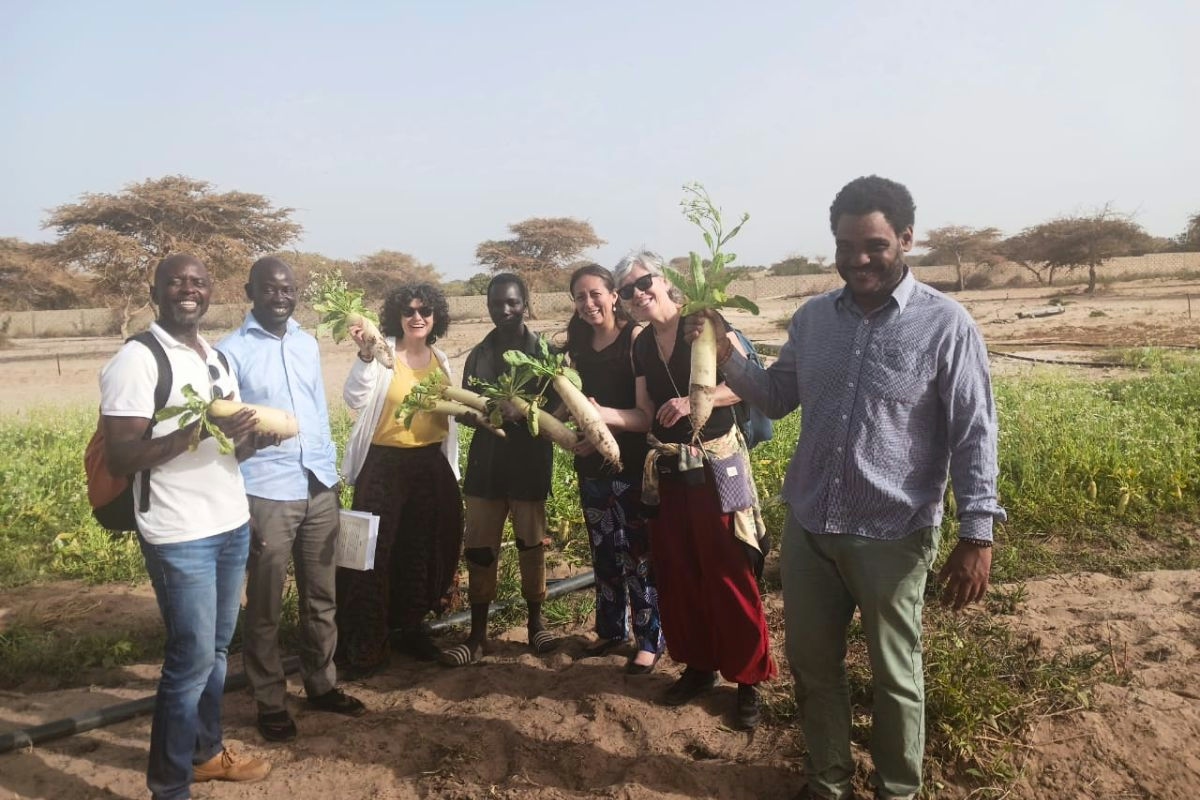
The delegation includes Fátima Morales Marín (Faculty of Medicine), Lisbeth Cathiana Paillacho Bolaños (Faculty of Tourism), María Esther Martin Rubio (Faculty of Education Sciences and Biology), Jean Remy Mongbet Ayoune (Faculty of Tourism and Finance), and Daniel Coq Huelva (Faculty of Economic Sciences).
Hosted by Amadou Mahtar Mbow University—one of NEEMA’s partner institutions—the group is carrying out a series of key activities. These include delivering in-person training for Module 7 on project management, part of a specialized course on food resilience, as well as holding meetings with local academics and researchers to strengthen collaboration.
The program also features the presentation of the NEEMA Toolkit, developed under Work Package 2, and field surveys with farmers and rural communities as part of Work Package 3. In addition, the USE team will participate in an institutional visit organized by EACEA, the project’s funding agency, to Cheikh Anta Diop University, NEEMA’s other Senegalese partner.
This visit underlines the University of Seville’s active role in promoting international cooperation and addressing global food security challenges.
About NEEMA
NEEMA is a 36-month capacity building project of Ulysseus European University funded through the ERASMUS+ program. It aligns with the European Green Deal and Farm to Fork Strategy, adapting these frameworks to the unique challenges of the Sahel and West Africa.
Led by the University of Seville, NEEMA aims to enhance food and nutritional resilience, focusing on vulnerable populations. The project involves 14 universities across Africa and Europe, fostering collaboration, designing contextual curricula, and launching pilot initiatives to strengthen local capacities in food security and sustainability.