




NEEMA Publishes Four Landmark Country Reports on Food and Nutritional Resilience in West Africa
These key documents highlight both shared and individual challenges across West Africa, including climate vulnerability, weak governance, and fragmented food systems. All emphasize the urgent need for integrated, sustainable approaches that uphold the right to food and strengthen social protection.
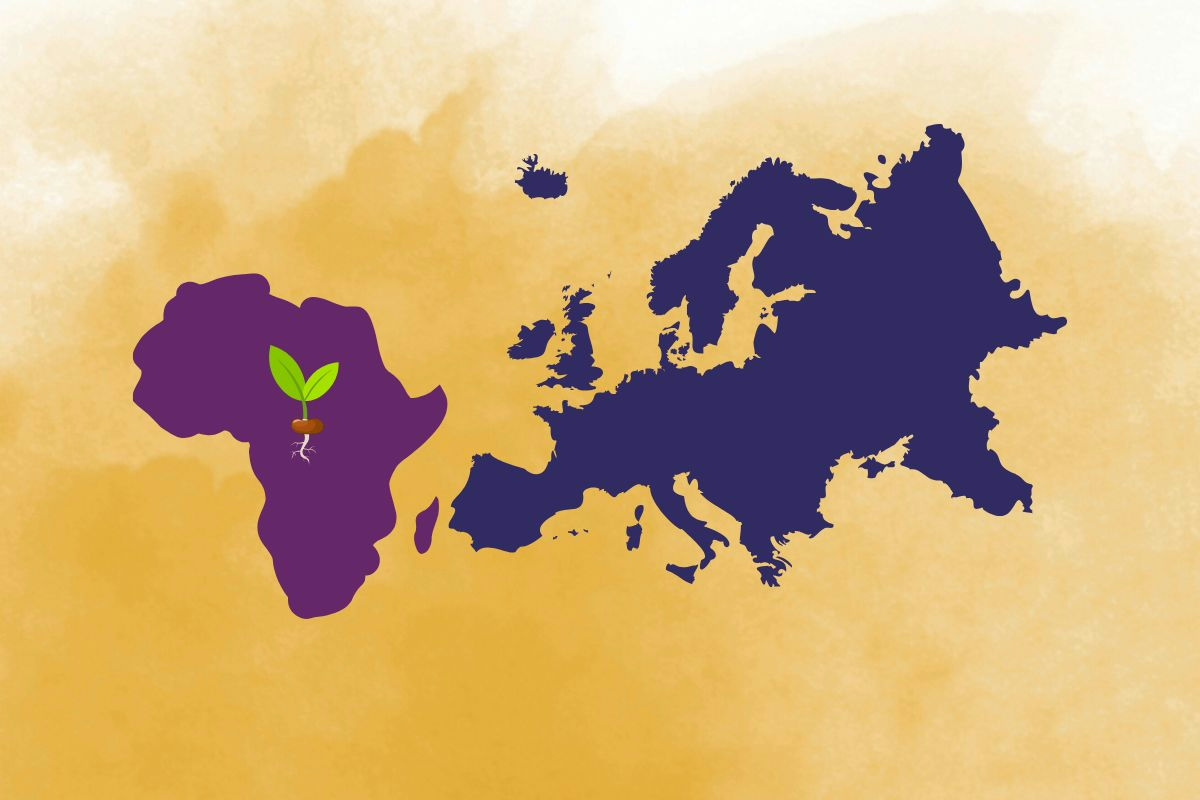
The NEEMA project, funded by the European Union through the ERASMUS+ programme, proudly announces the publication of four in-depth country reports on food and nutritional resilience in Senegal, Mali, Niger, and Burkina Faso. These key deliverables mark a major milestone in the project’s mission to strengthen higher education capacities in West Africa in response to the European Green Deal and the EU’s Farm to Fork Strategy.
The newly published reports represent months of rigorous analysis, stakeholder engagement, and evidence-based research. They offer a comprehensive evaluation of each country’s challenges, governance systems, policy gaps, and structural barriers, while highlighting opportunities to build stronger, more resilient food systems.
Common Themes and Insights from NEEMA Country Reports
Despite country-specific contexts, several common themes emerge of these country reports.
- Vulnerability to Climate and Security Shocks: All four countries face compounding threats from climate change, environmental degradation, and regional instability, which severely affect agricultural productivity and food availability.
- Weak Governance and Institutional Capacity: The reports point to fragmented coordination and insufficient governance frameworks in managing food systems and implementing food security policies effectively.
- Need for Integrated and Sustainable Approaches: There is a shared urgency to adopt holistic food system models that ensure availability, access, utilization, and stability of food—aligned with both human rights principles and environmental sustainability.
- Social Protection and Community Resilience: All reports highlight the necessity of improving social protection systems and recognizing food and nutrition as basic human rights, particularly for rural and vulnerable communities.
- Education and Research as Drivers of Change: Strengthening higher education institutions and fostering research and innovation are essential for equipping future professionals and policymakers with the tools to develop locally adapted solutions.
Food and Nutritional Challenges in Senegal, Mali, Niger, and Burkina Faso
The four NEEMA country reports provide critical, context-specific insights into the structural and systemic challenges shaping food and nutritional resilience in West Africa. The Senegal report underscores the pressing need to ensure access to safe, nutritious food in the face of rising prices, environmental degradation, and unsanitary food sources. In Mali, the analysis presents a comprehensive roadmap for transformation, emphasizing improved governance, climate risk management, and diversified livelihoods. The Niger report highlights persistent structural barriers, including underinvestment and fragmented policy implementation, while acknowledging the country’s considerable natural potential. Last, but not least, the Burkina Faso study offers concrete, evidence-based recommendations to enhance institutional capacity and governance structures essential for sustainable food system resilience.
These country reports are not only vital references for NEEMA’s curriculum development but also essential resources for national and regional stakeholders seeking to navigate the evolving landscape of food and nutritional resilience in West Africa.
These reports are available here.
NEEMA Beneficiaries:
- University of Seville (USE), Spain
- Université de Tahoua (UDH), Niger
- Université Abdou Moumouni de Niamey (UAMN), Niger
- Université Cheikh Anta Diop (UCAD), Senegal
- Université Amadou Mahtar MBOW (UAM), Senegal
- Université Thomas Sankara (UTS), Burkina Faso
- Université Nazi Boni, Polytechnique de Bobo-Dioulasso (UPB), Burkina Faso
- Université des Sciences Juridiques et Politiques de Bamako (USJPB), Mali
- Institut Polytechnique Rural de Formation et de Recherche Appliquée de Katibougou (IPR/IFRA), Mali
- University of Genoa (UNIGE), Italy
- Hochschule für öffentliche Verwaltung Kehl (HS KEHL), Germany
- Management Center Innsbruck (MCI), Austria
- Université Côte d’Azur (UniCA), France
- Haaga-Helia University of Applied Sciences (HH), Finland
About NEEMA
NEEMA is a 36-month capacity building project of Ulysseus European University funded through the ERASMUS+ program. It aligns with the European Green Deal and Farm to Fork Strategy, adapting these frameworks to the unique challenges of the Sahel and West Africa.
Led by the University of Seville, NEEMA aims to enhance food and nutritional resilience, focusing on vulnerable populations. The project involves 14 universities across Africa and Europe, fostering collaboration, designing contextual curricula, and launching pilot initiatives to strengthen local capacities in food security and sustainability.