Short Term Mobility: Physical Mobility Workshop II

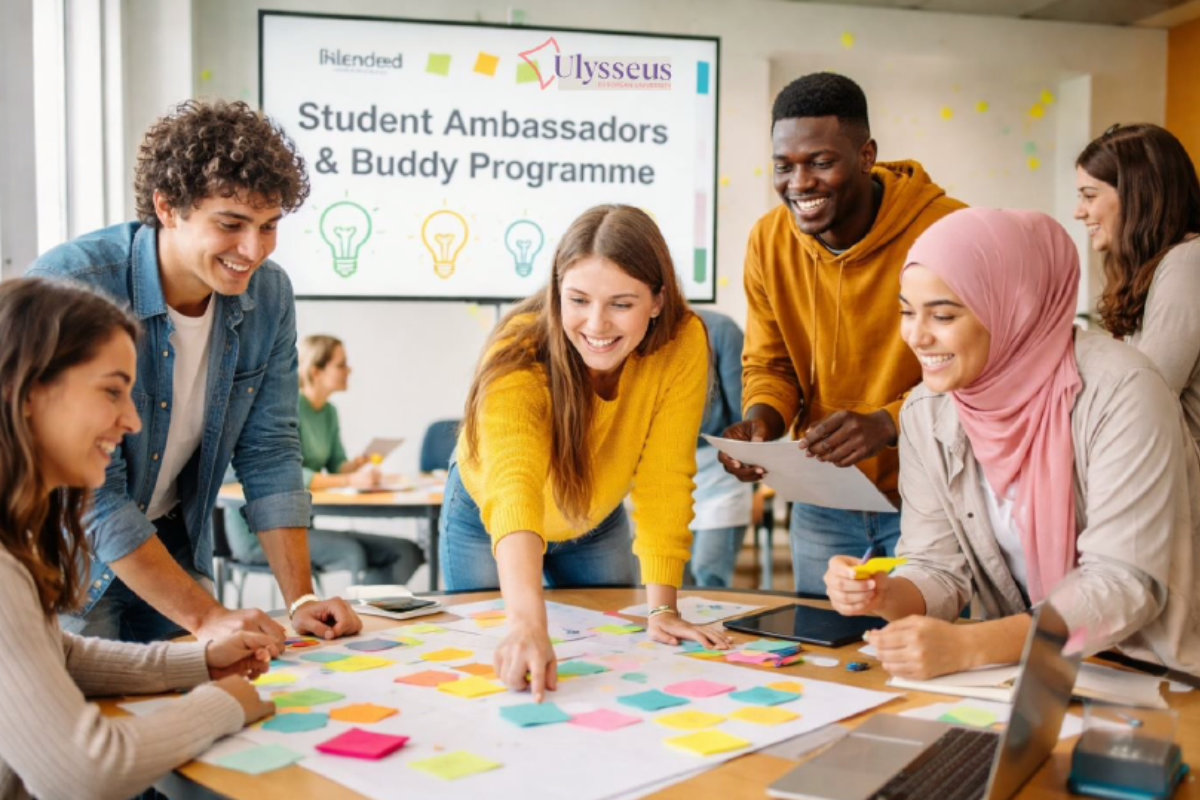
This mobility workshop aims to design, structure and consolidate the role of Ulysseus Student Ambassadors and the Buddy Programme within the alliance, reinforcing active student participation, intercultural integration, the welcome services and the promotion of more sustainable mobility among members of the Ulysseus Alliance. Competence framework aligned with Erasmus+: Intercultural competences, Communication skills, Social and leadership competences, European citizenship skills, etc.


Please be aware that your home university may set a different application deadline depending on their internal selection process.

Registration dates 28 March 2026 03 June 2026
Course dates 15 June 2026 19 June 2026
Registration is open
Short Term Mobility: Physical Mobility Workshop II

Course Outline

The programme will consist of five days of physical mobility, combining educational sessions, interactive workshops and collaborative work dynamics. The methodology will be eminently participatory, student-centred and practice-oriented, allowing the students to take a leading role in defining these models of representation and support.

One of the main outcomes of the programme will be the collaborative development of practical guides and operational tools, co-created by the participants themselves, which can be used by Ulysseus partner universities to implement or improve their ambassador and buddy programmes to integrate these groups in equality respecting their differences within Ulysseus and its welcome services while preserving the particularities of each institution.

The BIP introduces relevant elements of pedagogical innovation:

1. Project-Based Learning
Students will work on the actual creation of applicable guides, protocols and tools, connecting learning with tangible and useful results for the institution.

2. Co-creation and horizontal and co-responsible learning
Knowledge will not only be transmitted by experts but will also be generated through collaborative intercultural dynamics. This encourages peer learning and critical thinking.

3. Experiential and intercultural approach
Simulations, role-playing, practical case studies, participatory dynamics, and analysis of real situations related to mobility, integration, and intercultural communication will be incorporated.

Course Content

During the Workshop, different thematic areas will be addressed, including:

  • Strategic communication and student representation
  • Interculturality, inclusion and community building
  • Green mobility and sustainable practices
  • Mentoring methodologies and buddy systems
  • Leadership, teamwork and cross-cutting skills
  • Co-creation of Project management focused on student concerns
  • Practical exercises and analysis
  • Global competences

Learning Outcomes

Following this course, students will be able to develop key skills such as:

  • Co-creation dynamics
  • Cross-cutting skills
  • Intercultural communication
  • Collaborative leadership
  • Project management notions
  • Environmental awareness
  • Active European citizenship
  • Global Competences
  • Citizen Engagement

Expected learning outcomes:

By the end of the training, ambassadors should be able to:

  • Represent the university with confidence and consistency.
  • Communicate their academic experience in a strategic and persuasive manner.
  • Interact effectively with international audiences.
  • Lead student initiatives in line with the university’s strategy.

Expected outcomes of the Buddies training programme:

By the end of the training, buddies should be able to:

  • Effectively facilitate the social and academic integration of new students.
  • Build trust and provide practical guidance with empathy.
  • Apply intercultural skills and discuss cultural differences respectfully.
  • Act as an active support, contributing to the overall well-being of international students.

Requirements

Requirements for participants:

  • Students who are part of buddy programmes, ESN, Ulyssa, or who are interested in joining these student groups or improving welcome services for students.
  • Academic or non-academic staff involved or interested in the topics covered in this workshop.

Physical Mobility

physical mobility part will be running from 15 to 19 June 2026 in Seville. The programme may undergo changes in the order of sessions and cultural activities to adapt them to the objectives.

Agenda

Day 1 (15 June 2026)

Morning

10:00 Check-in
10:30-13:00 What does it mean to be part of a European University?

  • Welcome to Ulysseus (Ulysseus General Coordinator and Ulysseus Academic Director)
  • Programme presentation (Director of Mobility/ Director of International Strategy)
  • Ulysseus “academic mobility offer tour”

13:00 Lunch

Afternoon

14:00-16:00 Group Dynamics/”Breaking the Ice”
16:00-18:00 City Tour

Day 2 (16 June 2026)

Morning

10:00-13:00 Co-creation and Transferable Tools. Intercultural Competencies.

  • Configure the Buddy and Ulysseus Ambassador figures

13:00 Lunch

Afternoon

14:00-17:00 Intercultural Competencies. Group dynamics.
17:00-18:00 Cultural visit (TBC)

Day 3 (17 June 2026)

Morning

10:00-13:00 Project Management

  • Project management focused on student topics
  • Group Dynamics

13:00 Lunch

Afternoon

14:00-16:00 Cultural visit (TBC)
16:00-18:00 “Exploring the city” Gymkhana

Day 4 (18 June 2026)

Morning

10:00-12:00 Communication, Storytelling and Testimonials

  • Responsible digital communication

12:00-13:00 Learning to communicate Ulysseus

  • Tools and Tips

13:00 Lunch

Afternoon

14:00-16:00 Practice assignment: recording testimonials
16:00-18:00 Cultural visit (TBC)

Day 5 (19 June 2026)

Morning

10:00-13:00Presentation of group final projects

  • Diplomas and certificates


Virtual Component

After the physical part, there will be a session to formally present the work carried out by the students and another session to present the results to the mobility coordinators of all the partner universities.

Requirements

  • Students who are part of buddy programmes, ESN, Ulyssa, or who are interested in joining these student groups or improving welcome services for students.
  • Academic or non-academic staff involved or interested in the topics covered in this workshop.

Application Process

  • Each university will use the selection criteria it deems appropriate, but please consider the desired requirements for participants.
  • Participants from the University of Seville will be asked to provide a letter of motivation and references that support the requirements.
  • 1-3 students per Ulysseus university up to a maximum of 15 participants among
    all partners. Students will be selected according to each university’s selection process, based on the requirements indicated.
  • 1-2 staff per Ulysseus university up to a maximum of 5 among all partners.
  • Academic and non-academic staff who wish to participate in teaching any of the workshops can express their interest by sending an email to mobilityulysseus@us.es
  • Deadline for submitting the list of participants: 3 June.
  • Mobility agreements may be concluded until 12 June at the latest.

Professors

  • Rocío Martínez de Pablos
  • Manuel Jesús Sabariego
  • Bernabé Alonso (TBC)
  • Carmen Hinojosa
  • Juan Luis Blanco (TBC)
  • Daniela Miranda (TBC)
  • David Moreno (TBC)
  • Rubén López
  • Nacho Sáenz
  • Elena Romera

More information