




Université Côte d’Azur and TUKE Collaboration Celebrates a Pedagogical Innovation Award and Welcomes MCI
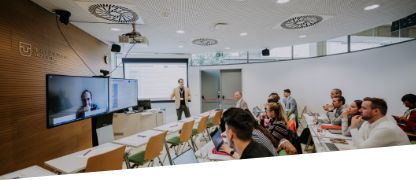
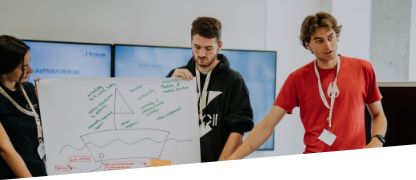
Learning across borders has been at the heart of this project from the start. Now entering its fifth year, the undergraduate collaboration between EUR ELMI, the Graduate School of Economics and Management at Université Côte d’Azur, and the TUKE Faculty of Economics centres on a joint start-up competition, where international student teams work remotely to develop ideas to make university life more sustainable.
Recently awarded a “Grand Prix de l’Innovation Pédagogique” by Université Côte d’Azur, the project follows a COIL (Collaborative Online International Learning) approach, with teachers from participating universities integrating international remote teamwork into their curricula. Previously involving the University of Montenegro and now welcoming MCI | The Entrepreneurial School®, the initiative helps students develop multilingual and intercultural competence alongside digital and entrepreneurial skills. Teams assess their skills, develop a start-up idea and pitch it to teachers and entrepreneurial experts at Université Côte d’Azur Entreprendre.
Since launching in 2022 with just 20 teams, the project has grown rapidly: 448 international teams, representing almost 1,800 students, have pitched sustainable ideas for university life and gained concrete international teamwork experience. With MCI joining this year, more than 100 teams and seven teachers will take part in the latest edition.
Collaborative Teaching and Learning
This COIL project was designed to help students develop their English communication skills in a real-life environment while benefiting from classroom input, discussion and feedback. “My research suggested that many students in the French HE sector were frustrated with the way English was being taught and evaluated and wanted a more realistic way to use and develop the language” says Zenna Marshall, who proposed the initial concept.
The project was then developed with Eva Kaščáková and Henrieta Kožaríková (TUKE), connecting English learning with authentic international collaboration and the development of intercultural and 21st-century skills. “We have co-designed this programme to make language learning more meaningful and practical. This partnership stands as a concrete example of our objective, which is to prepare students to communicate, collaborate and work effectively in an increasingly international workplace.”
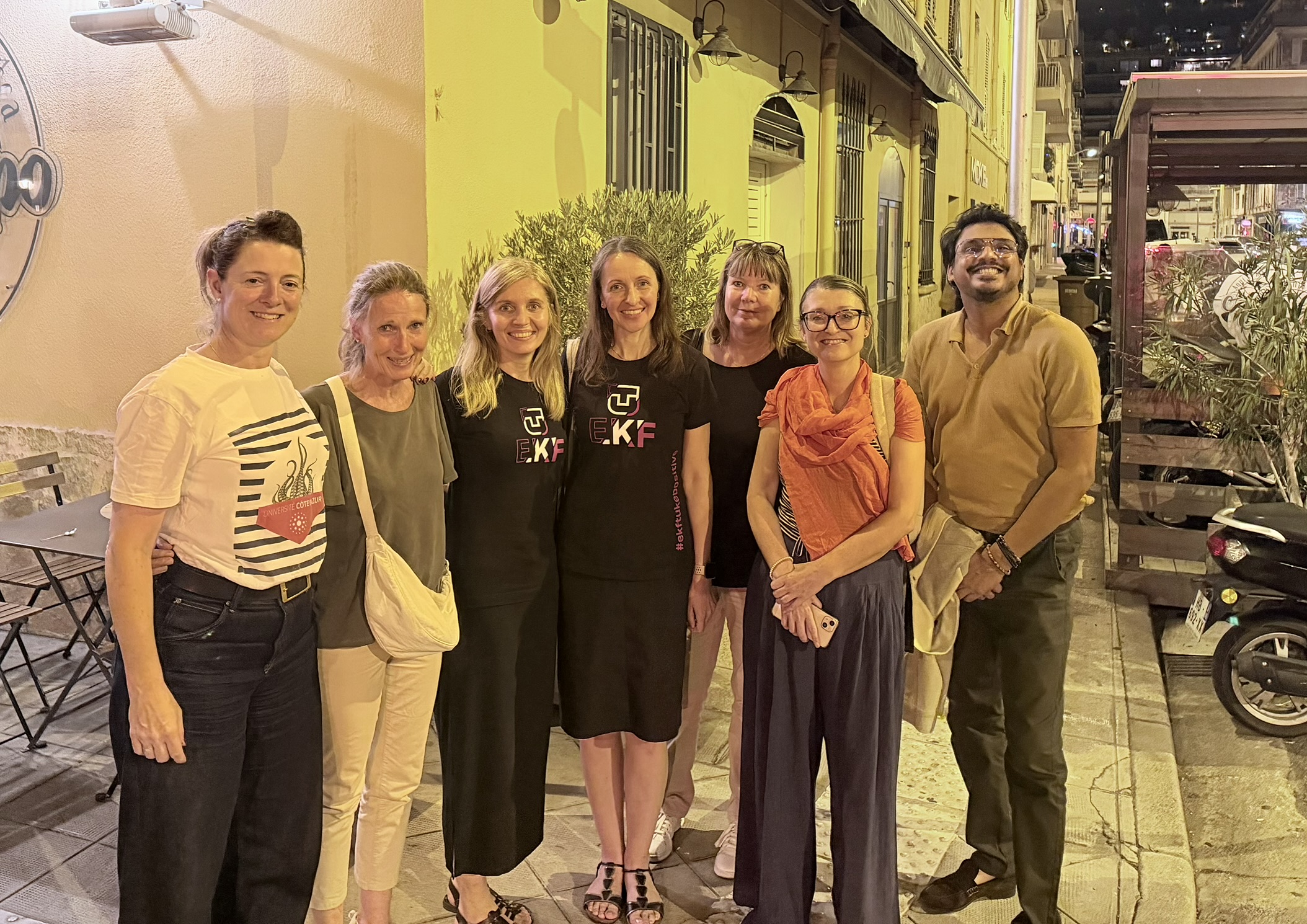
The project also includes EdTech microlessons developed by Zoë Land following her MSc in Smart EdTech at Université Côte d’Azur. Designed with the needs of modern students and remote teams in mind, they offer a flexible approach to learning and collaboration. “I feel immensely proud of what our international team has achieved together so far. This project proves that when creators are given the freedom, time, and support to innovate, individual potential can be unlocked that enriches learning and development for everyone. Backing innovative creators with true time and financial support ensures everyone reaps the rewards.”
A European Approach to Learning and Entrepreneurship
Bringing together diverse cultures of teaching and learning, this initiative is a collaborative experience not only for students but also for educators, departments and entrepreneurial hubs across the Ulysseus Alliance. Building on the work of the University of Montenegro and the original judges from the Innovation Fund of Montenegro, UniCA Entreprendre now brings its entrepreneurial expertise to the judging panel and, together with Pépite Méditerranée, offers winning teams support to bring their projects to life. “UniCA Entreprendre supports this initiative because it gives the students an opportunity to experience entrepreneurship in an international context rather than simply learn it about it” says Olga Pabion, Operational Director of UniCA Entreprendre. Through multicultural teamwork, students identify real-life challenges, develop ideas and pitch them to experts, with the possibility of taking promising projects towards real-life implementation with PEPITE.
With the addition of MCI to the collaboration, new opportunities are emerging to further develop its intercultural dimension. Jason Chan, who teaches Business Communication at the Business and Management Department, wants to use the Ulysseus network to bring students from different European universities together through a joint intercultural project: “For me, the real potential of Ulysseus lies in getting students out of their individual classrooms and working together across languages, cultures and national boundaries. Intercultural communication should not only be something we teach; it should be something students actually experience. By working on shared projects, they learn to negotiate different perspectives, communicate across cultures and create something together.”
Looking ahead, the partners aim to strengthen the initiative’s interdisciplinarity and student-led dimension while continuing to support promising projects beyond the classroom. By developing the knowledge, skills and attitudes needed to work transnationally at undergraduate level, Ulysseus is creating opportunities not only across the European business landscape, but also for future postgraduate and faculty-led collaborative research.