




NEEMA Strengthens Food Resilience Efforts in Bamako
NEEMA has stepped up its collaboration and capacity-building initiatives in West Africa, hosting a week-long program of activities in Bamako at the end of November. The effort underscores the project’s commitment to improving food and nutritional resilience across the Sahel.

Anchored in the European Green Deal and the Farm to Fork Strategy, and funded by the Erasmus+ programme, NEEMA aims to adapt these European frameworks to the realities of vulnerable communities in the region. The project, led by the University of Seville, brings together African and European universities in a robust partnership.
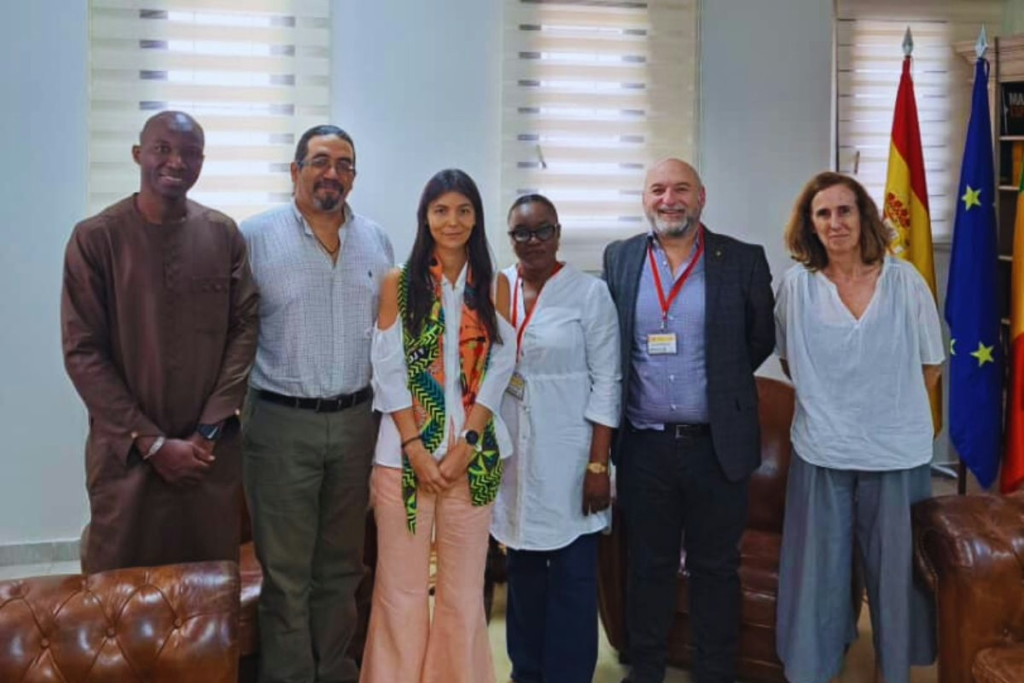
The mission opened with a high-level meeting at the Spanish Embassy in Bamako, where NEEMA coordinator Miguel Ángel Martín of University of Seville and Mamadou Nientao of the University of Political and Legal Sciences of Bamako briefed Spanish officials on recent progress. Discussions with Patricia Gómez Lanzaco, Deputy Head of Mission, and José Antonio Monje Vargas, AECID’s General Coordinator in Mali, focused on future collaboration and support from Spanish cooperation.
Academic engagement was also central to the visit. NEEMA delivered Module 4 of its Food and Nutritional Resilience Curriculum, covering Sustainable Development Goals (SDGs), at the University of Legal and Political Sciences of Bamako. The in-person session gave faculty and students direct access to the project’s educational resources.
To complement the academic sessions, NEEMA hosted the international seminar “Innovative Public Policies in Nutrition and Sustainable Food Systems: The Role of International Cooperation.” Supported by the Spanish Embassy in Mali and Burkina Faso, the event brought together academics and representatives from local and international organizations, expanding NEEMA’s network. Institutions present included the Embassy of Spain in Mali and Burkina Faso, AECID, the University of Legal and Political Sciences of Bamako, Nazi Boni University, Thomas Sankara University, and the University of Seville.
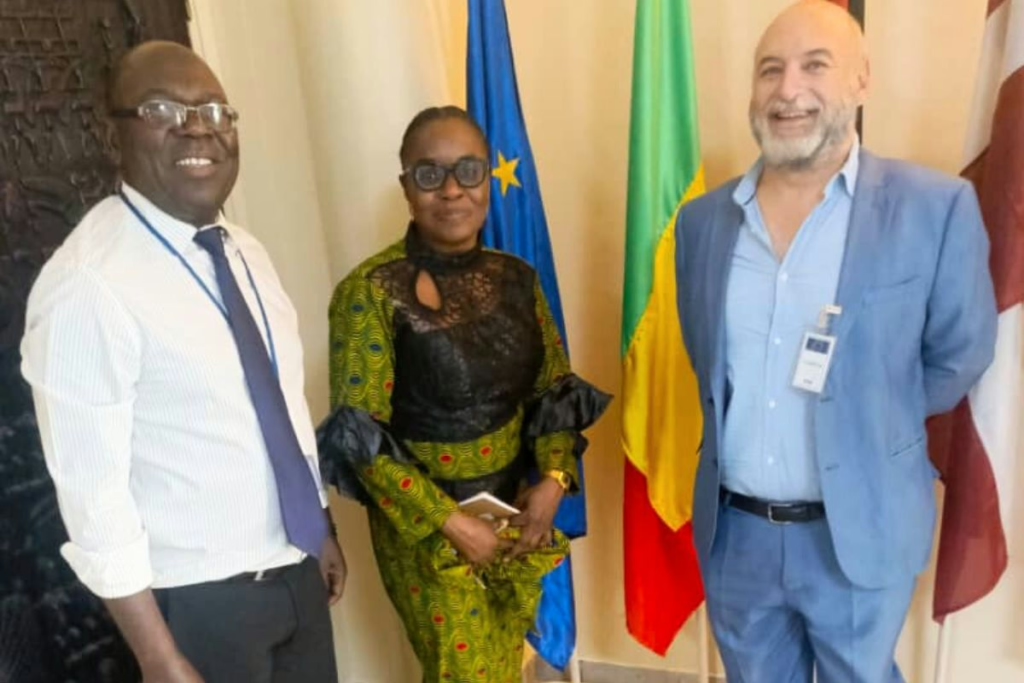
Following this seminar and, given NEEMA’s EU-funded nature, Miguel Angel Martín met with representatives of the European Union Delegation in Mali to review progress and address operational challenges. A separate meeting with the Erasmus+ Programme Focal Point tackled accreditation issues ahead of upcoming training sessions.
Through these initiatives, NEEMA continues to strengthen academic capacity in West Africa, promoting resilience and helping the region navigate the implications of the EU’s Farm to Fork Strategy.
About NEEMA
NEEMA is a 36-month capacity building project of Ulysseus European University funded through the ERASMUS+ programme. It aligns with the European Green Deal and Farm to Fork Strategy, adapting these frameworks to the unique challenges of the Sahel and West Africa.
Led by the University of Seville, NEEMA aims to enhance food and nutritional resilience, focusing on vulnerable populations. The project involves 14 universities across Africa and Europe, fostering collaboration, designing contextual curricula, and launching pilot initiatives to strengthen local capacities in food security and sustainability.