
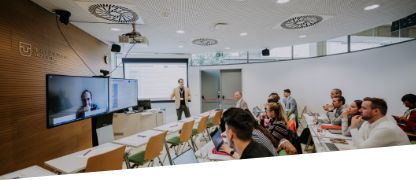




NEEMA will host tomorrow a seminar on Innovative Public Policies in Nutrition and Sustainable Food Systems
The activity will take place on 26 November, from 10:00 AM to 1:00 PM CET and will be hosted by the Embassy of Spain in Bamako.

This event highlights the strong collaboration between the NEEMA consortium and the Embassy of Spain in Mali and Burkina Faso, aimed at increasing the visibility of the project’s achievements to date as well as its upcoming activities.
The seminar, hosted by the Embassy of Spain in Bamako, will bring together faculty members from NEEMA partner universities, along with representatives of local and international organizations dedicated to strengthening food and nutritional resilience. Their participation will contribute to expanding the NEEMA network—one of the project’s key expected outcomes.
The activity will be conducted in French.
Participants include the Embassy of Spain in Mali and Burkina Faso; AECID; the University of Legal and Political Sciences of Bamako (NEEMA partner, Mali); Nazi Boni University (NEEMA partner, Burkina Faso); Thomas Sankara University (NEEMA partner, Burkina Faso); and the University of Seville, which serves as the NEEMA coordinating partner and facilitates the project coordinator’s mobility to Mali.
Would you like to join?
If so, please join the meeting here.
Id: 395 038 192 142 71
Access code: Qg2FM9Rs
For further details, please download the programme.
About NEEMA
NEEMA is a 36-month capacity building project of Ulysseus European University funded through the ERASMUS+ programme. It aligns with the European Green Deal and Farm to Fork Strategy, adapting these frameworks to the unique challenges of the Sahel and West Africa.
Led by the University of Seville, NEEMA aims to enhance food and nutritional resilience, focusing on vulnerable populations. The project involves 14 universities across Africa and Europe, fostering collaboration, designing contextual curricula, and launching pilot initiatives to strengthen local capacities in food security and sustainability.