



Coffees with Science: Sparking Curiosity Among Secondary School Students at the University of Seville
This initiative, carried out in collaboration with Fundación Descubre, is part of the Ulysseus activities aimed at secondary schools. Its objective is to inspire future scientific vocations and bring science closer to everyday life.
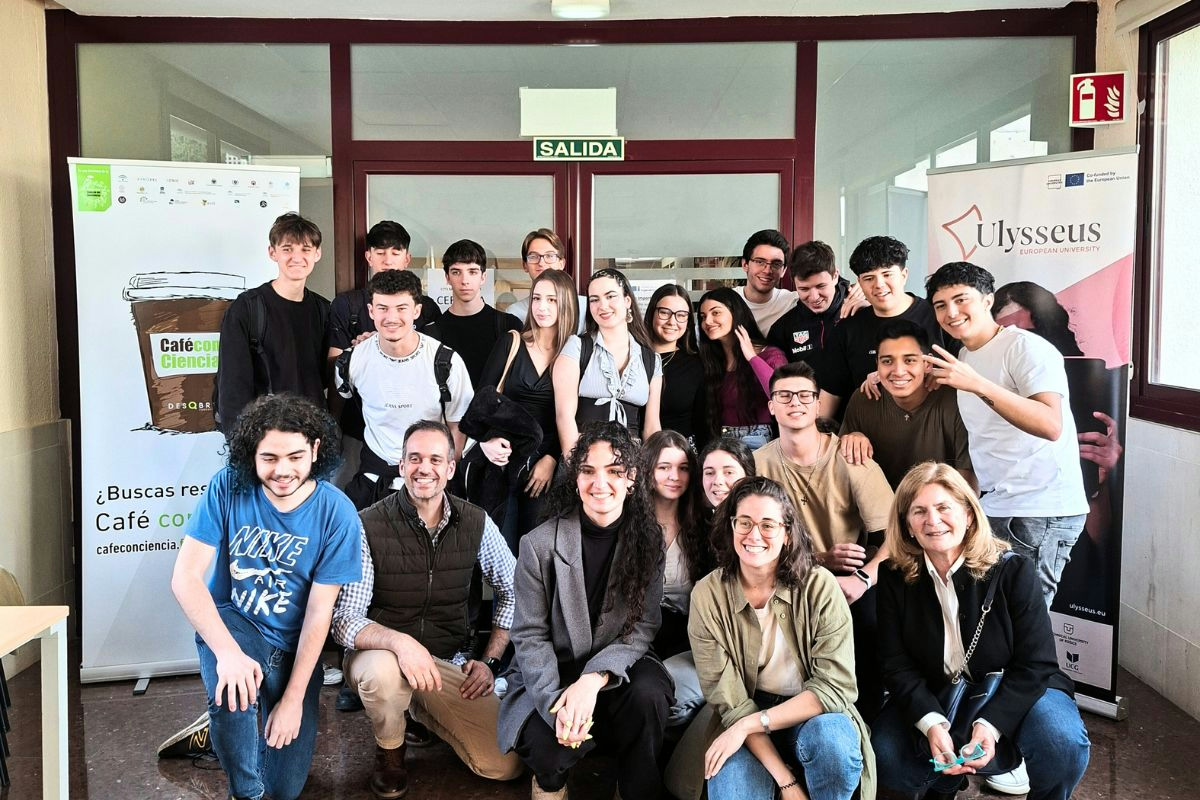
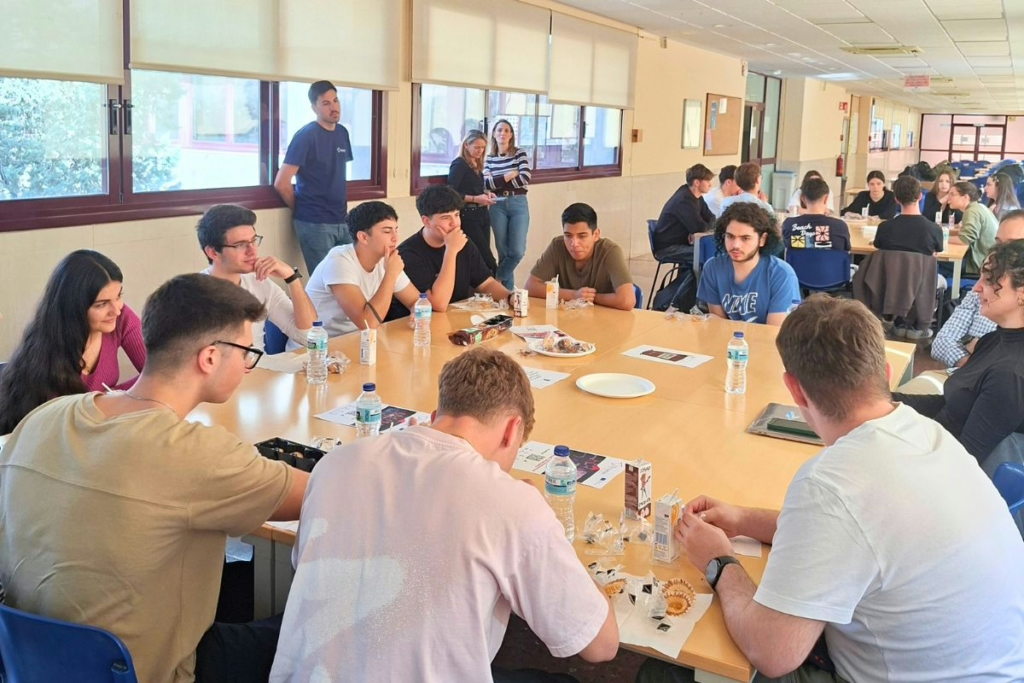
On March 19 and March 24, a total of 60 students from two secondary schools in Seville attended several Coffees with Science sessions at the School of Computing of the University of Seville. In this activity, a scientist sits down with a small group of guests around a table to chat while enjoying breakfast. The participants are students in the final years of secondary school who book a session with a scientist to experience science outside the classroom. During the meetings, scientists talk about their research, their day-to-day work, and even their hobbies, engaging in an informal and friendly conversation with the students.
For this occasion, five Ulysseus scientists from the University of Seville contributed talks covering a wide range of cutting-edge scientific topics connecting research, technology, health, and society. Students learned that science is not confined to laboratories or textbooks, but actively shapes the world we live in—from our bodies and brains to our mobile phones and computers. The talks encouraged curiosity and critical thinking, helping students understand how diverse scientific disciplines work together to solve real-world problems.
Science, Technology, and the Future: Exploring Health, Intelligence, and Innovation
These Coffees with Science explored a variety of themes. The sessions addressed how environmental factors can leave invisible traces in the human body, even before birth, and how scientists use biomonitoring, laboratory studies, and computer simulations to investigate the effects of pollution on health and brain development. Technology was another central theme, with a clear and accessible introduction to artificial intelligence that showed how AI already plays a role in everyday tools such as social media filters, facial-editing apps, and automated customer services.
The importance of brain health was discussed through topics such as protecting cognitive functions during brain surgery and promoting healthy lifestyle habits to build long-term resilience. The talks also presented science as a global and interdisciplinary journey, highlighting how international experiences, collaboration, and mobility enrich scientific careers and encourage students to think beyond traditional boundaries. Finally, the sessions looked to the future by exploring how nature can inspire new ways of computing, from bio-inspired algorithms to emerging technologies like quantum computing.
Altogether, Coffees with Science offered a dynamic and inspiring overview of science as a creative, evolving field full of opportunities for the next generation.
Programme of talks
Environmental CSI: What traces do pollutants leave in our bodies? by María Gracia Hinojosa Hidalgo
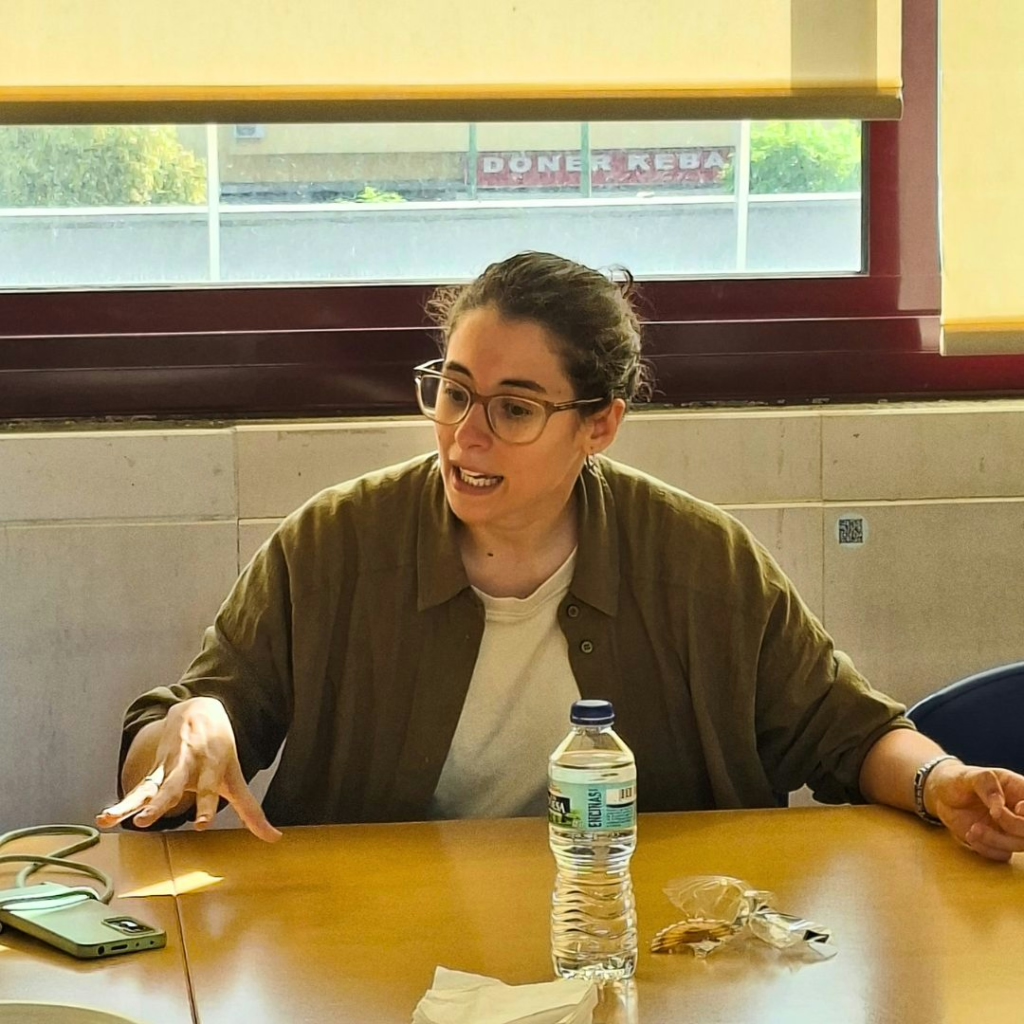
This talk explores how the environment we live in can leave traces inside us even before we are born. It explains what biomonitoring involves: essentially, researchers act like detectives, searching for traces of contamination in samples from pregnant women and young children. It addresses key questions such as whether plastics or smoke affect brain development and whether they are linked to neurodivergence. The talk also demonstrates that the work goes beyond using pipettes. Researchers use computer simulations (mathematical models) to predict how toxins move through the human body without invasive procedures, as well as laboratory studies with cells. In short, it presents “science 3-in-1.”
What is Artificial Intelligence and why is it so popular? by Belén Vega.
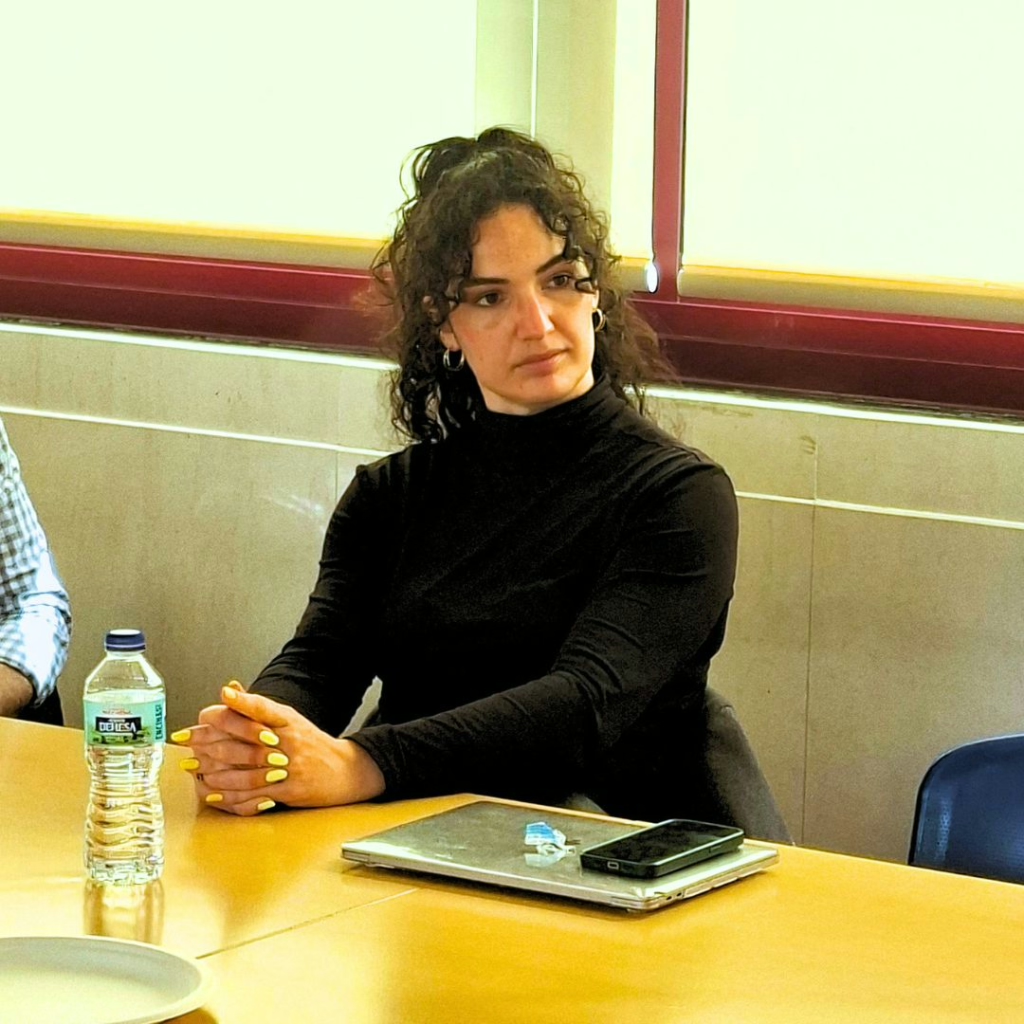
Artificial intelligence (AI, for short) is a term that is increasingly heard everywhere, and many people still think of it as something from the future or only seen in movies. This talk aims to show that AI is not science fiction, but a technological tool that can be used in many areas of everyday life.
It highlights familiar examples: those apps that change your face and make you look older rely on artificial intelligence. Instagram filters also work thanks to AI. Even those automated voices that answer phone calls—sometimes frustrating—are another everyday example of artificial intelligence in action.
Protecting the brain, building resilience: from the operating room to healthy habits by Isabel María Martín Monzón.
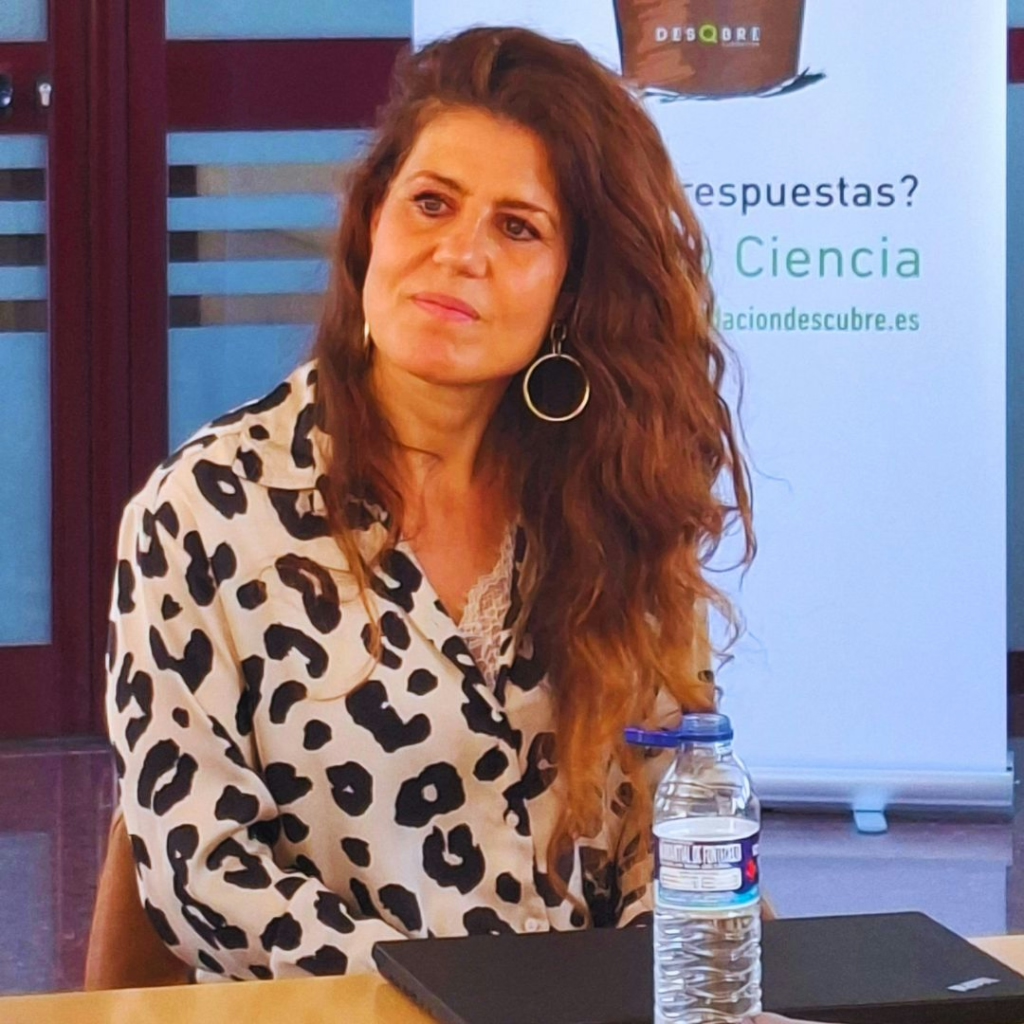
This talk focuses on the integration of intraoperative neuropsychology and the promotion of healthy lifestyle habits as complementary strategies for preserving cognitive reserve in patients with oncological and neurological conditions.
Intraoperative neuropsychology in awake surgery has become a key tool for functional brain mapping and for preserving critical cognitive functions during the resection of brain lesions. The patient’s active participation allows for the real-time identification of networks involved in language, memory, and executive functions, optimizing the balance between maximal tumor resection and minimal functional impairment.
Scientific Passport by Rebeca M. Mejías Estévez
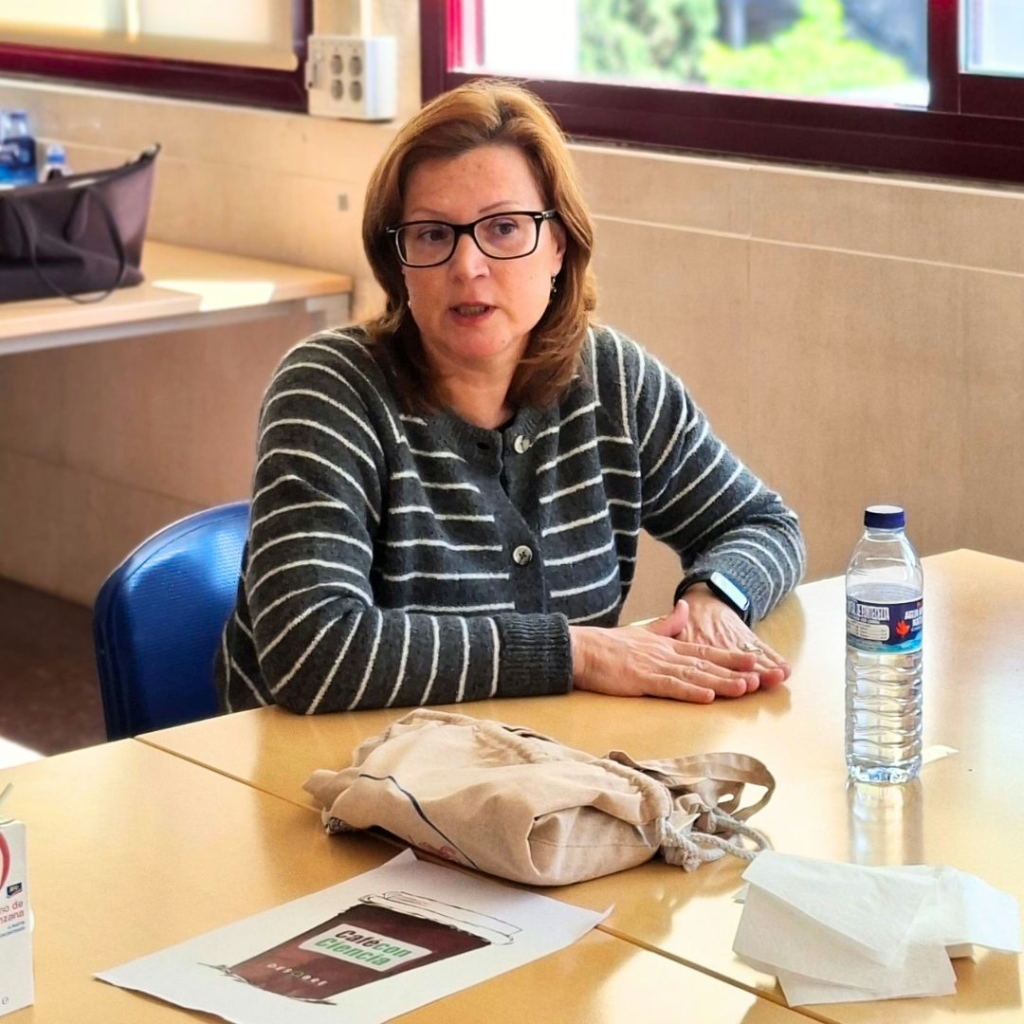
This talk presents a personal and relatable account of how an international and interdisciplinary career—spanning academia and industry, and involving work across different scientific fields—has driven the speaker’s growth as a researcher. It shares insights on cultural adaptation, working in multidisciplinary and multicultural teams, and how these experiences expand professional opportunities. It also explains how mobility and international collaboration help develop a more open, creative, and cooperative scientific perspective.
Nature as a calculator by Antonio Ramírez de Arellano Marrero
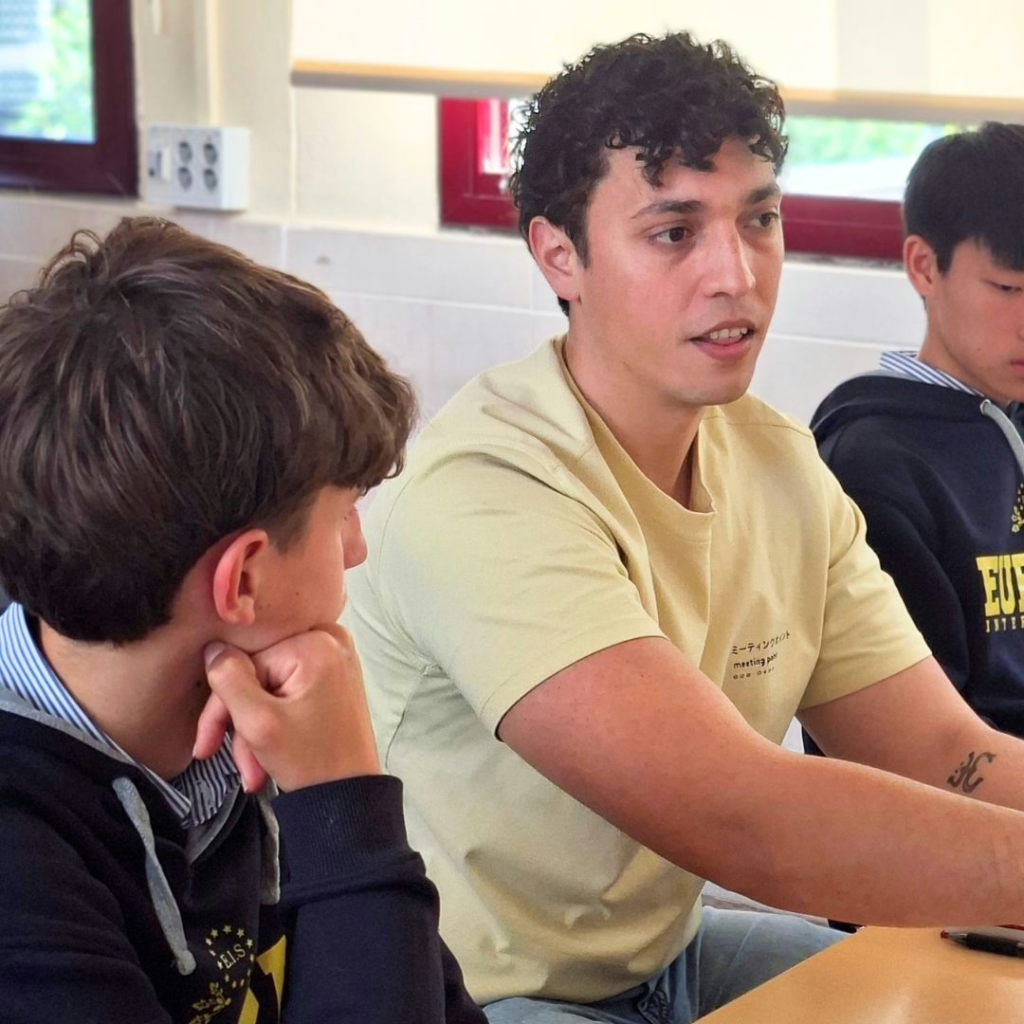
This talk explores how computers perform calculations and whether there are limits to what they can do. Nearly 100 years ago, the mathematician Alan Turing defined what could and could not be computed by a machine. Today’s computers still follow those “conventional” ideas, but since then, alternative perspectives have been developed. The talk highlights how nature can serve as a powerful source of inspiration. Fields such as quantum computing and artificial intelligence are presented as current examples showing that new “bio-inspired” approaches are possible. This area, known as bio-inspired computing, can be applied to almost every aspect of life.
About Ulysseus
Ulysseus is one of the 73 European Universities alliances selected by the European Commission under its flagship initiative of the European strategy for universities. These alliances, co-funded by the European Commission, bring together almost 650 higher education institutions of all types from across Europe. Led by the University of Seville, the Ulysseus European University Alliance encompasses seven other partner universities: the Université Côte d’Azur (France), University of Genoa (Italy), the Technical University of Košice (Slovakia), MCI | The Entrepreneurial School® (Austria), Haaga-Helia University of Applied Sciences (Finland), the University of Münster (Germany), and the University of Montenegro (Montenegro).