



Spaces of Tourism: Design and Architecture for Citizenship

The workshop is part of the ULYSSEUS Alliance, forming part of the Design, Architecture and Tourism Landscapes series, which has already organised two workshops: one in Genoa (2024) and another in Helsinki (2025). The next one will be developed in Seville and the coast of Huelva, in particular in the cultural landscape of the campus La Rábida, near the International University of Andalusia, organised and supported by the University of Genoa, Haaga-Helia University of Applied Sciences and the University of Montenegro.


The objectives will focus on acquiring skills to develop design projects in public spaces characterised by nature and landscape. Students will design highly innovative interventions capable of contributing dynamically to meeting the needs of contemporary society. This course is aimed at anyone interested in design from any discipline. Participants will learn to design the interaction between design, architecture, cultural heritage, landscape, tourism and the experience economy, while designing landscape infrastructures aimed at promoting civic inclusion, environmental preservation and the enhancement of cultural heritage.


Please be aware that your home university may set a different application deadline depending on their internal selection process.
Registration dates 28 March 2026 30 April 2026
Course dates 08 June 2026 12 June 2026
Registration is open
Spaces of Tourism: Design and Architecture for Citizenship

Course Outline

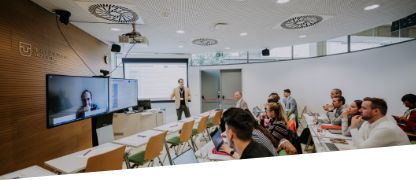
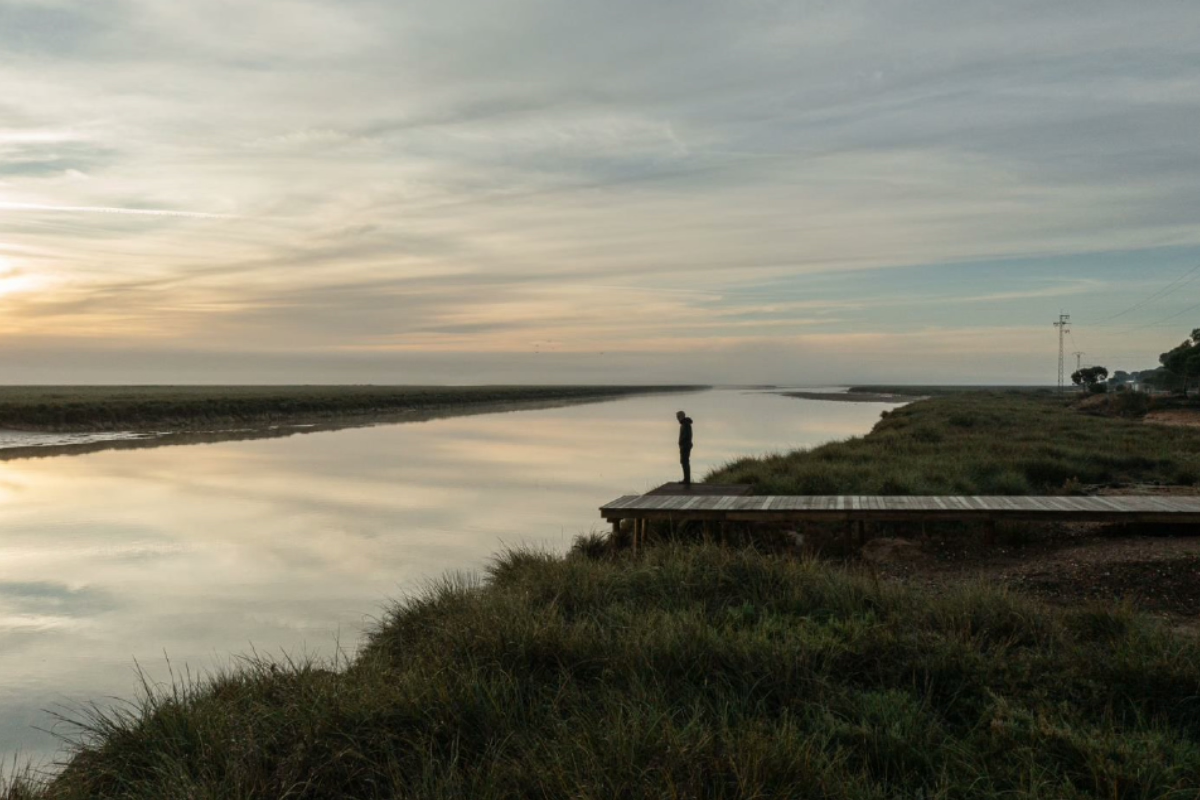
This course aims to equip participants with competences to design spaces for European coastal places within the experience economy. Through a blend of virtual seminar and a hands-on five-days design thinking, participants will work in teams and conceptualize new spatial interventions in the coastal territory of western Andalusia. Each team will develop an original proposal based on the proposed exercise located in the cultural landscape of the coast of La Rábida.

The course will feature lectures from various Ulysseus partner universities, and it will be enhanced by field visits and guest presentations from industry partners.

Course Content

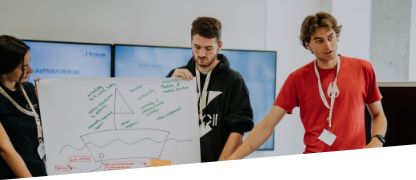
The working method includes virtual seminars and five days of practical design, including visits to the site or sites involved in the intervention, lectures related to the issue under analysis, and critical sessions involving stakeholders. This method has already been implemented in the two previous editions in Genoa and Helsinki. Based on a common practical exercise, participants will work in teams and conceptualise highly innovative new spatial interventions. This method is already used by the organising professors in their respective disciplines and universities, from economics to tourism, architectural theory and design, allowing this workshop to share and enrich experiences with interdisciplinary and national approaches. The course will feature lectures by professors from the various universities associated with Ulysseus, as well as external guests and stakeholders, and will be complemented by field visits and cultural activities.

Following the model of the two previous workshops, the exercise will take place in a coastal town, where enhancement actions will be implemented to improve citizen involvement and liveability. The results will take the form of concrete responses to citizens’ problems in the way they inhabit the territory’s public spaces, within the framework of the service-learning teaching method. The results will take the form of concrete responses to citizens’ problems in how they inhabit public spaces in the territory, framed within the service-learning teaching method. The responses will take the form of architectural, urban and territorial projects that include socio-economic aspects. The results obtained will be shared in a final critical session to which stakeholders such as institutions, organisations or groups of citizens interested in the results are invited.

Learning Outcomes

Following this course, students will be able to:

  • Understand landscape and architectural theories in order to interpret the cultural, historical and aesthetic dimensions of tourist landscapes.
  • Apply theories of the experience economy and their relevance to the design of meaningful heritage and tourist experiences.
  • Employ the design thinking process to collaboratively develop innovative architectural and/or design interventions for a city’s tourist landscape.
  • Communicate design and/or architecture concepts to both academic and professional audiences.

Requirements

  • Students enrolled in studies of the following levels in Ulysseus Universities: Bachelor’s or equivalent level (ISCED level 6 – EQF level 6) & master’s or equivalent level (ISCED level 7 – EQF level 7).
  • Participants are required to have a B1 level of English.

Physical Mobility

The physical mobility part will be running from 08 to 12 June 2026 in Seville and La Rábida campus, in the coast of Huelva, Spain.

Agenda

Day 1 (08 June 2026)

Morning
School of Architecture (University of Seville, Seville)

  • Welcome to the course
  • Challenge presentation
  • Design Sprint process

Afternoon

  • Understanding on the field
  • Cultural tour of Seville, related to the exercise

Day 2 (09 June 2026)

Morning
(Campus La Rábida-UNIA)

  • Travel to the coast of Huelva

Afternoon

  • Visualize Understanding
  • Define design opportunity

Day 3 (10 June 2026)

Morning
(Campus La Rábida-UNIA)

  • Generate ideas

Afternoon

  • Select ideas

Day 4 (11 June 2026)

Morning
(Campus La Rábida-UNIA)

  • Conceptualize solution

Afternoon

  • Prototype solution

Day 5 (12 June 2026)

Morning
(Campus La Rábida-UNIA)

  • Test solution

Afternoon

  • Present final solutions
  • Travel to Seville

Virtual Component

28/ 05/ 2026 – Virtual seminar via Microsoft Teams.

Topic: Landscapes in the local experience economy

Professors

  • Dr. Mário Passos Ascenção, Haaga-Helia UAS
  • Prof. Vittorio Pizzigoni, University of Genova
  • Prof. Carlos Plaza, University of Seville
  • Prof. Teresa Rodríguez Miró, University of Seville
  • Arq. Marta Parra Jiménez
  • Dr. Luis Miguel Cortés Sánchez
  • Prof. Slavica Stamatovic Vuckovic, Universitet Crne Gore
  • Prof. Irena Rajkovic, Universitet Crne Gore
  • Prof. Nevena Masanovic, Universitet Crne Gore

More information