



Home: The X-Factor in Future Cities (Summer Institute 2026)

Cities have long been understood as engines of growth, innovation, and opportunity. Today, however, their future is increasingly defined by a more fundamental question: can cities still provide a home? In the context of rising housing costs, homelessness, energy insecurity, climate stress, and social fragmentation, home is no longer a private matter alone. It has become a core urban function, shaping well-being, inclusion, talent retention, and social stability. Cities that fail to secure access to home risk losing not only people, but trust, resilience, and long-term viability.


The Summer Institute 2026 will focus on “Home” as a central challenge and opportunity for future cities, addressing housing affordability, homelessness, energy security, well-being, and the role of young people in shaping resilient and inclusive urban environments.


Please be aware that your home university may set a different application deadline depending on their internal selection process.
Registration dates 15 March 2026 31 May 2026
Course dates 29 June 2026 03 July 2026
Registration is open
Home: The X-Factor in Future Cities (Summer Institute 2026)

Course Outline

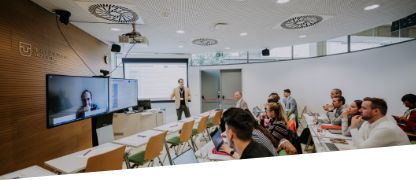
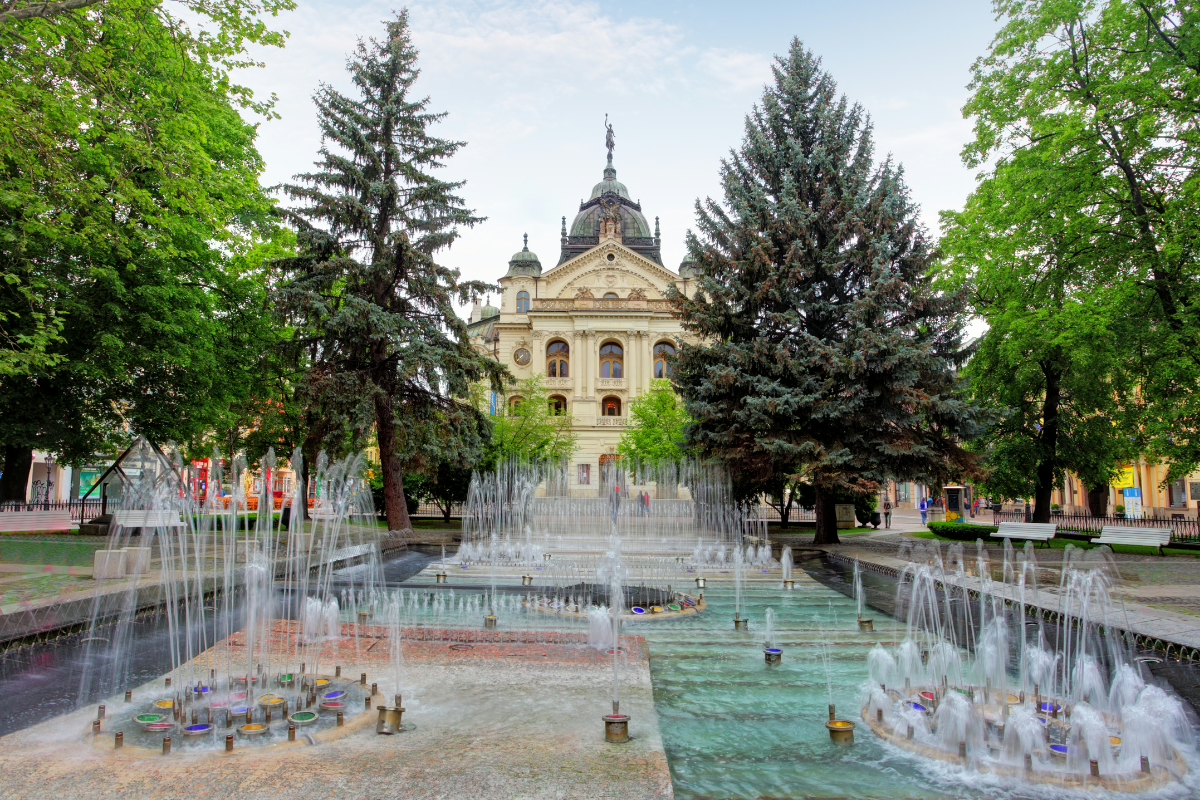
The program will consist of several learning methods. Teamwork is expected during the Summer Institute 2026. The virtual part of the program will be focused on explaining theoretical background and providing learning materials and factsheets about the Košice city. Physical part of the program will take place in Košice and will consist of several activities for Master/PhD students and young scholars.

Preliminary structure of the program:

  • Meet the professors – discussion with professors during breakfast – everyday activity.
  • Lectures – lectures on specific topics within the scope of the Summer Institute 2026 held by well-recognised international scholars.
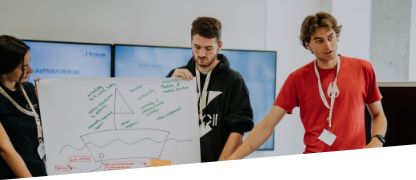
  • Workshop – introductory workshop focused on initiation of case studies to be solved at the Bootcamp in cooperation with the Košice city and different organizations.
  • Bootcamp – Hack the City – practical case studies.

At the end of the Summer Institute 2026 it is expected from each team to present the case study solutions.

Course Content

The programme will bring together Master/PhD students, early-stage researchers, and young scholars from Ulysses European University partners and beyond, representing disciplines such as urban and regional science economics, urban studies, architecture, geography, social work and related fields. The concept of home goes beyond housing alone. It reflects questions of:

• affordable and accessible housing for young people,
• homelessness and social exclusion,
• energy security and climate-resilient housing,
• mental well-being and quality of urban life,
• talent, mobility, and future opportunities in cities,
• the use of AI and digital tools in housing policy, urban planning, and
social services.

Cities are no longer only spaces to be governed; they are systems that learn. As data-rich and algorithm-driven environments, cities increasingly rely on artificial intelligence, digital platforms, and advanced modelling tools to analyse housing markets, manage energy systems, and identify social vulnerabilities. This transformation, however, raises critical questions:

• Who benefits from smart/intelligent cities?
• Can AI support inclusion rather than deepen inequality?
• Can digital tools help cities care as well as optimize?

The Summer Institute 2026 will combine lectures by international experts, interdisciplinary teamwork, and policy-oriented discussions, aiming to develop science-based and AI-supported insights and practical tools for cities. Outcomes of the programme will contribute to European and global debates on sustainable, resilient, and intelligent urban development.

Learning Outcomes

Following this course, students will be able to:

  • Master Resilience Concepts: apply in-depth knowledge of resilience frameworks and evidence-based strategies to real-world urban challenges;
  • Design Sustainable Urban Systems: utilize acquired skills to design adaptive, data-driven, and sustainable urban systems;
  • Apply Advanced Tools and Methods: live hands-on experience with advanced tools and methods to address real-world urban challenges;
  • Shape Future Urban Resilience: explore collaborative opportunities to shape future urban resilience policies, supported by the X-Factor of resilience, new insights, and practical, smart, and effective solutions.

Requirements

  • Participants should be Master/PhD students or young scholars in the fields of study such as urban and regional science, economics, urban studies, architecture, geography, social work and related fields.
  • Participants should be fluent in English, minimum level B2.
  • Participants should be eager to work in teams and enthusiasts for solving actual city problems.

Physical Mobility

Start date: 29/06/2026.
End date: 03/07/2026.

Agenda

Day 1

Morning
08:00 – 09:00 Registration
09:00 – 12:00 Greeting speech and introduction

Afternoon
13:30 – 16:30 Lectures
18:00 Public Debate with key-note speakers

Day 2

Morning
08:00 – 09:00 Meet the professors
09:00 – 12:00 Lectures

Afternoon
13:30 – 16:30 Lectures
18:00 Hack the City

Day 3

Morning
08:00 – 09:00 Meet the professors
09:00 – 12:00 Lectures

Afternoon
13:30 – 16:30 Specialised Fieldwork/Guided City tour

Day 4

Morning
08:00 – 09:00 Meet the professors
09:00 – 12:00 Bootcamp

Afternoon
13:30 – 16:30 Bootcamp
18:00 Farewel party


Day 5

Morning
08:00 – 09:00 Meet the professors
09:00 – 12:00 Student work presentation

Afternoon
13:30 – 16:30 Student work presentation
18:00 Evaluation and closing ceremony

Application Process

  • Deadline for accepting applications: 31/05/2026.
  • Required documents: CV, thesis proposal.
  • Depending on student’s HOME UNIVERSITY, please find below the contact information, including a list of links providing email addresses from the mobility offices of each of the Alliance’s universities.

Professors

  • Peter Nijkamp, Open University, The Netherlands
  • Carlos Moreno, Paris IAE – Pantheón Sorbonne University, France
  • Karima Kourtit, Open University, The Netherlands
  • Catherine Gall, Paris IAE – Pantheón Sorbonne University, France
  • Oto Hudec, TUKE, Slovakia
  • Neil Reid, University of Toledo, USA
  • Umut Türk, Turkey
  • Bruce Newbold, Canada
  • Abdul Shaban, India
  • Jaewon Lim, US, South Korea
  • Charlotta Mellander, Sweden
  • Tomáš Želinský, TUKE, Slovakia
  • Miriam Šebová, TUKE, Slovakia
  • Lenka Maličká, TUKE, Slovakia
  • Peter Džupka, TUKE, Slovakia
  • Erik Kajáti, TUKE, Slovakia
  • Martina Zeleňáková, TUKE, Slovakia

More information