




42 Joint R&I Groups Funded, 288 Researchers Engaged: Ulysseus Seed Funding Call Delivers Outstanding Results
The Seed Funding Programme successfully launched 42 Joint Research & Innovation Groups, mobilising 288 researchers, engaging associated partners, and reinforcing long-term European collaboration across partner universities.

The Ulysseus European University Alliance has reached a major milestone in strengthening its research and innovation ecosystem through the successful implementation of its Seed Funding Programme for Joint Research & Innovation (R&I) Groups. The first call has delivered outstanding results, supporting 42 transnational research teams involving 288 researchers and 22 associated partners, while allocating a total of €450,000 to foster long-term collaboration, interdisciplinary research, and innovation across the alliance.
These results highlight the strategic importance of Joint Research & Innovation Groups as a cornerstone of Ulysseus’ long-term vision for strengthening research collaboration and building sustainable transnational research communities.
Joint R&I Groups: The Backbone Behind Ulysseus Research Impact
The Ulysseus European University is built on the ambition to move beyond isolated projects and short-term cooperation. A key element of this vision is the creation of Joint Research & Innovation (R&I) Groups — stable, transdisciplinary teams that connect researchers across partner institutions, disciplines, and regions.
Joint R&I Groups play a central role in achieving Ulysseus’ strategic objectives: bridging education and innovation, strengthening long-term research collaboration, and fostering an inclusive European research community. Rather than focusing on single projects, these groups provide a framework for sustained cooperation, joint agenda setting, and the development of future research and innovation initiatives.
Seed Funding Programme as a Catalyst for Collaboration
To support the formation of Joint R&I Groups, Ulysseus launched the Seed Funding Programme for Joint Research & Innovation Groups. The programme is designed as a catalyst: providing early-stage funding that allows researchers to connect, refine joint research ideas, prepare publications, and develop competitive proposals for external funding. It supports interdisciplinary and thematic research initiatives that align with Ulysseus’ strategic priorities, fostering scientific collaboration and innovation. The seed funding from the programme is designed to facilitate networking and collaborative efforts among researchers, allowing them to explore new research directions and strengthen institutional cooperation across the Ulysseus alliance. The programme is committed to supporting both early-career and experienced researchers, promoting inclusivity and long-term sustainability of research networks.
The first call, open from 1 April to 23 May 2025, served as a pilot phase to test the model and mobilise the research community across the Ulysseus. It aimed to encourage new collaborations and reinforce existing research connections. Researchers from different institutions were welcome to work together to develop innovative solutions to common challenges, leveraging the diverse expertise within the Ulysseus network.
The call 2025 has concluded with outstanding results
45 applications were received in total from all partner universities; 42 Joint R&I Groups were selected for funding — with a total of 450 000 EUR allocated by 8 Local Selection Committees across the Ulysseus partner universities.
The funded groups involve 288 researchers and 22 associated partners, including 71 young researchers (25 %) and 136 women (47 %).
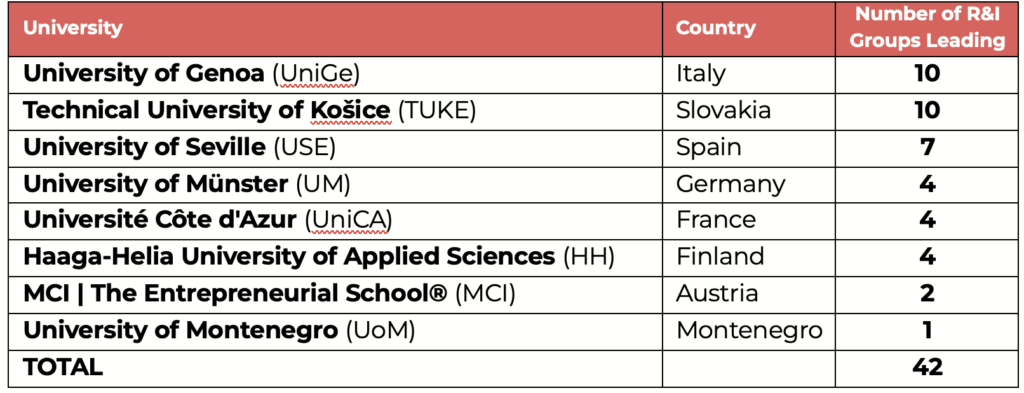
University leadership of Ulysseus Joint R&I Groups
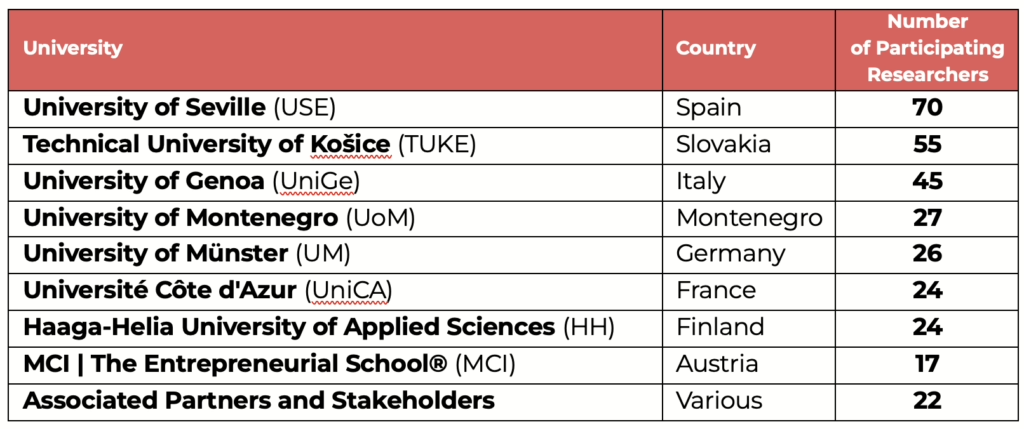
Researchers’ involvement per university
Career stages of participating researchers:
- First Stage Researchers (R1): 17%
- Recognised Researchers (R2): 23%
- Established Researchers (R3): 32%
- Leading Researchers (R4): 24%
These figures reflect not only the popularity of the call, but also the relevance of Joint R&I Groups as a mechanism for connecting expertise and building research capacity across Ulysseus. The special section of the Ulysseus website dedicated to present the Joint R&I Group is under construction and will be open in 1Q 2026.
Anchored in Ulysseus Innovation Hubs — and Beyond
A significant share of the funded Joint R&I Groups is anchored in the Ulysseus Innovation Hubs (13 groups), reinforcing the alliance’s strategic thematic priorities and its ambition to connect research, innovation, and education within regional and European ecosystems. These hubs provide a natural framework for transdisciplinary collaboration, bringing together academic expertise with applied perspectives and societal needs.
💡 The funded groups align with Innovation Hub themes such as:
- Applied Artificial Intelligence for Business & Education (5)
- Socio-ecological Sustainability (3)
- Sustainable Entrepreneurship & Impact (2)
- Ageing & Well-being (1)
- Digital Transformation of Industry (1)
- Sustainable Energy, Transport & Mobility for Smart Cities (1)
By building on these thematic platforms, Joint R&I Groups contribute to coherent agenda setting and strengthen the long-term integration of research and innovation activities across the alliance.
🔬 At the same time, other groups focus on disciplinary and interdisciplinary research areas, ensuring openness and inclusiveness beyond predefined themes: Technological Sciences (9), Life Sciences (5), Interdisciplinary Studies (4), Pedagogy (2), and other scientific disciplines (9).
The programme explicitly supports the involvement of associated partners and external stakeholders within Joint R&I Groups. In the first call, 22 associated partners joined funded groups, representing industry, public authorities, research organisations, and other actors from regional innovation ecosystems. Their participation ensures that research agendas are informed by real-world challenges and that collaboration extends beyond academia.
This combination of Innovation Hub anchoring and stakeholder engagement allows Joint R&I Groups to operate both within and beyond predefined thematic structures. While many groups are closely linked to Innovation Hubs, others address disciplinary and interdisciplinary topics emerging from bottom-up collaboration among researchers and partners. This openness supports inclusiveness, encourages experimentation, and strengthens the role of Ulysseus as a connector between universities, innovation ecosystems, and society.
From Seed Funding to Long-term Impact
Supported activities will take place between September 2025 and August 2026. During this period, Joint R&I Groups are expected to deliver concrete outputs such as joint publications, preparation of research proposals, and strengthened collaboration between universities and associated partners.
Building on the experience of the pilot call, Ulysseus will continue to develop the Seed Funding Programme as a long-term instrument supporting its research and innovation ecosystem — reinforcing cooperation, inclusiveness, and European excellence in line with the alliance’s mission. Second call of the seed funding programme is planned for 2026.