




All That Glitters Is Not Real – AI & Disinformation webinar recording published
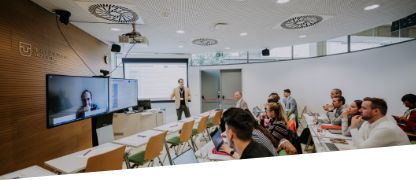
At the end of February, the METACOG project hosted an engaging webinar titled “All That Glitters Is Not Real – AI & Disinformation,” bringing together experts from across Europe to discuss one of the most pressing challenges of the digital age: how artificial intelligence is transforming the landscape of disinformation and what higher education institutions can do to respond effectively

The webinar was organized and hosted by Haaga-Helia University of Applied Sciences and featured an expert panel including Sari Korhonen, Jeffrey Dahl (The Hague University of Applied Sciences), Umair Ali Khan, and Andreja Mihailovic (University of Montenegro). Each speaker contributed valuable insights into the evolving relationship between artificial intelligence technologies and the spread of misleading or manipulative content online.
During the session, the speakers explored how AI technologies are increasingly being used to generate synthetic media, deepfakes, and automated content, making it easier to produce convincing yet misleading information at scale. These developments raise important concerns for society, particularly in relation to public trust, democratic processes, and the reliability of online information ecosystems.
At the same time, the discussion emphasized that AI is not only part of the problem but can also be part of the solution. The panel highlighted the growing role of AI-supported tools for detecting disinformation, as well as the importance of critical thinking and AI literacy within academic communities. Universities and educators play a crucial role in equipping students with the skills needed to critically assess digital content, understand how AI systems work, and responsibly engage with emerging technologies..
The webinar also underscored the broader goals of the METACOG project, which focuses on strengthening AI literacy, critical thinking, and resilience against disinformation across higher education in Europe. By fostering collaboration between universities, researchers, and educators, the project aims to support the development of educational resources and training that help learners navigate an increasingly complex information environment.
The webinar also underscored the broader goals of the METACOG project, which focuses on strengthening AI literacy, critical thinking, and resilience against disinformation across higher education in Europe. By fostering collaboration between universities, researchers, and educators, the project aims to support the development of educational resources and training that help learners navigate an increasingly complex information environment.
Watch the recording
For those who were unable to attend the live session, the full webinar recording is available online
We invite everyone interested in AI, media literacy, and the future of trustworthy information to watch the recording and join the ongoing conversation about strengthening information integrity in higher education.
About METACOG
METACOG is an EU-funded AI literacy programme designed to combat disinformation and fake news by promoting civic engagement and shared European values.
The initiative aims to strengthen citizens’ ability—particularly among higher education students and teachers—to recognize and respond to disinformation through an innovative curriculum, AI-based tools, and best practices.
By acknowledging the dual role of artificial intelligence in both generating and countering disinformation, METACOG seeks to empower individuals with the critical thinking and digital literacy skills essential for navigating today’s information landscape.
Targeting higher education institutions, government and non-governmental organizations, media professionals, and the general public, METACOG is led by Haaga-Helia University of Applied Sciences (Finland) in collaboration with the Technical University of Košice (Slovakia), the University of Montenegro (Montenegro), and The Hague University of Applied Sciences (The Netherlands). The project is funded under the Erasmus+ Programme (KA220-HED) and will run from 1 September 2024 to 31 August 2027.