




Université Côte dʼAzur brings Ulysseus & VR to a wider audience at EIAE 2025
At the European Association for International Education (EAIE) 2025 conference in Gothenburg, Université Côte dʼAzur showcased RIGO, its Ulysseus-backed VR research that helps students rehearse international mobility. The strong interest from attendees underscored growing demand across academia for practical, inclusive digital tools.
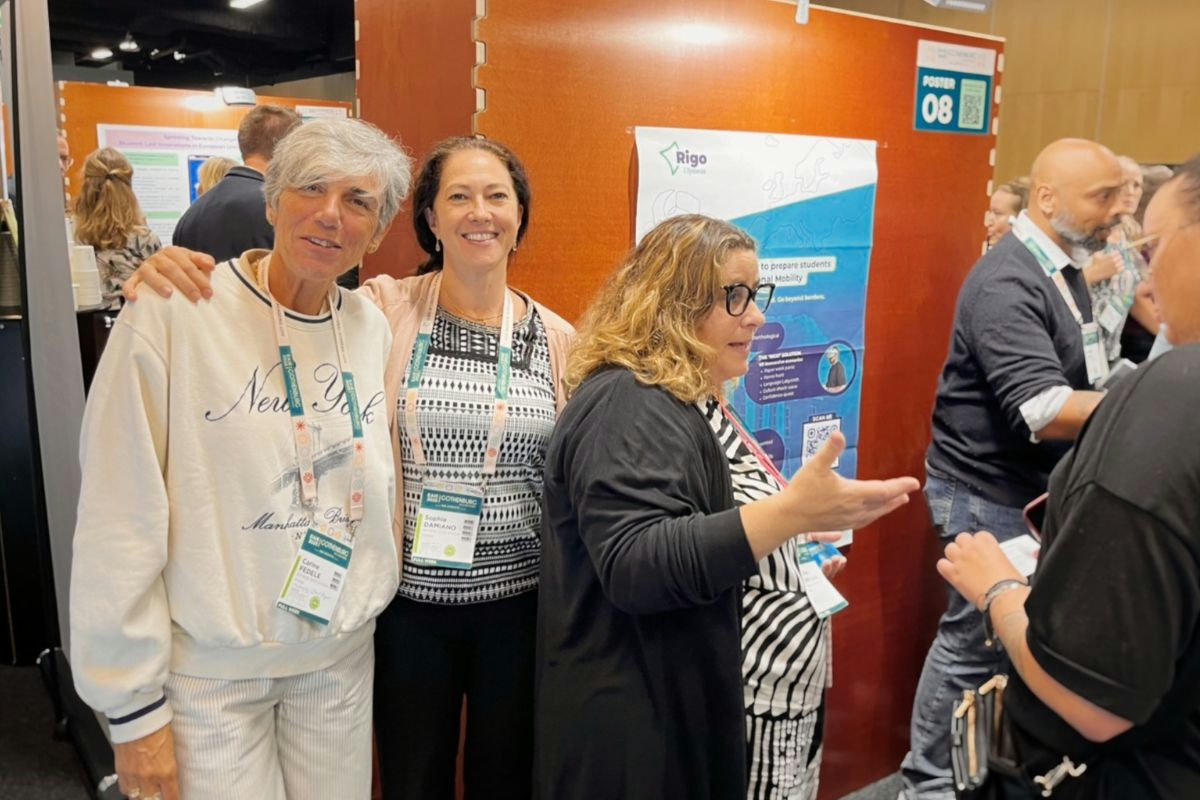
RIGO presented in Gothenburg
From 9–12 September, the European Association for International Education (EAIE), Europeʼs leading community for internationalization in higher education, gathered over 7,000 professionals from more than 100 countries in Gothenburg, Sweden.
As the leading partner in the RIGO research project, Université Côte dʼAzur (UniCA) used the occasion to introduce the Ulysseus-backed initiative to a broader public and showcase how Virtual Reality (VR) can prepare students for international mobility.
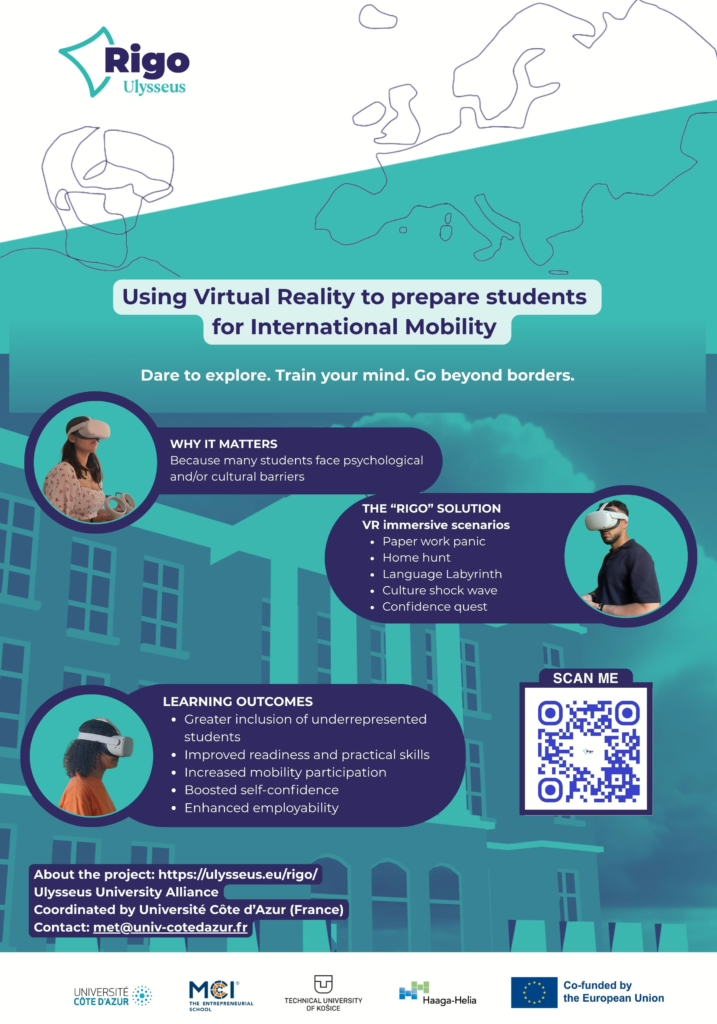
The UniCA team demonstrated how VR can smooth the leap from home campus to host country, and outlined both the opportunities and the challenges of applying VR in higher education.
Aligned with Ulysseus goals of accessibility, inclusion, and employability, RIGOʼs core mission is to make international education more digital, inclusive, and accessible. By leveraging VR technology, the RIGO VR learning scenarios address specific competences for students preparing for physical mobility, while also offering meaningful virtual explorations for those who may not be able to travel.
Evidence of growing interest
The strong turnout and lively discussions around the poster mirrored a broader trend weʼve seen across the consortium this year: the academic community is eager for hands-on applications of digital tools, innovative teaching methods, and effortless internationalization. RIGOʼs approach of combining the exploration of VR technology with the goal of making international mobility more accessible sparked great interest among conference attendees.
Why it matters
- Democratizing Mobility. Immersive practice reduces anxiety and builds selfconfidence for students facing logistical, socio-economic, or accessibility barriers.
- Innovative Education. Co-created with learners, RIGOʼs scenario design is grounded in student insights to ensure immediate relevance and practical skillbuilding.
- European Ecosystem. As a Ulysseus “satelliteˮ project, RIGO connects digital innovation with coordinated services across alliance campuses.
Whatʼs next
Following EAIE, partners are integrating their local VR scenarios into a shared platform for pilots and showcase use across universities. With a trajectory from kick-off (2023) to co-creation (2024) to platform development (2025), RIGO is positioned as a promising testbed for future advances at the intersection of digitalization and internationalization in higher education.
About RIGO
Launching in September 2023, the 36-month project promises an exciting digital transformation for partner universities, leveraging innovative learning practices with VR technology. Beyond enhancing digital skills, the project tackles inclusion and diversity in education, facilitating the preparation of students who, due to socio-economic or physical constraints, have been deprived of international experiences. The RIGO project welcomes a digital future of inclusive international mobility. Follow our transformative journey!
About Ulysseus
Ulysseus Alliance vision for 2030 is to develop an excellency-recognized and internationally attractive open to the world, people-centered and entrepreneurial European University for the citizens of the future. By doing so, our ambition is to contribute to shape the European Higher Education and Research Areas, and hence the future of Europe. Ulysseus is one of the 41 European Universities selected by the European Commission to become the universities of the future.
Led by the University of Seville together with seven other universities in Europe (the University of Genoa, Italy; Université Côte dʼAzur, France; the Technical University of Košice, Slovakia; MCI | The Entrepreneurial School®, Austria; Haaga-Helia University of Applied Sciences, Finland; the University of Münster, Germany; and the University of Montenegro, Montenegro), the project will allow students, researchers and graduates to move freely between universities, carry out internships in companies and start high-impact research projects.