




NEEMA International Seminar Explores Pathways to Food and Nutritional Resilience in West Africa
This event forms a vital part of the NEEMA project, which brings together key academic institutions from both West Africa and Europe.
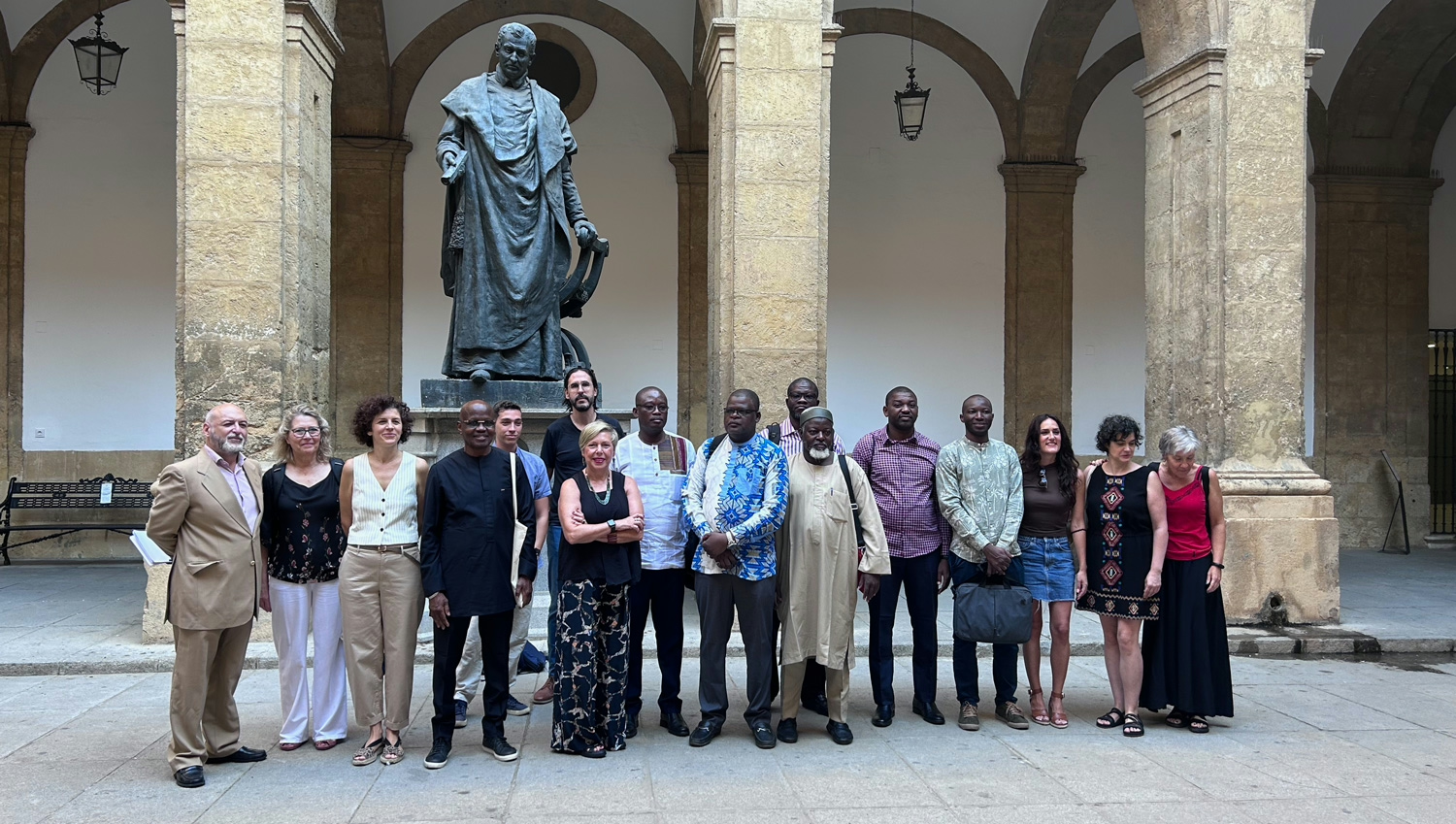
The University of Seville is hosting the International Seminar on Observatories of Food and Nutritional Resilience from July 14 to 18, 2025. Embedded within the broader NEEMA project of Ulysseus European University, the event brings together major academic institutions from Africa and Europe. Attendees include representatives from Université Cheikh Anta Diop and Université Amadou Mahtar Mbow in Senegal, Université des Sciences Juridiques et Politiques de Bamako in Mali, Université de Niamey and Université de Tahoua in Niger, and Université Thomas Sankara in Burkina Faso, alongside the coordinating institution, the University of Seville.

From Toolkit to Transformation: NEEMA’s Global Collaboration
One of the central themes of the seminar is the development of the Food and Nutritional Resilience (FNR) Toolkit, which is being led by the University of Seville. This toolkit is a strategic milestone for the NEEMA project and is designed to support various stakeholders, including educators, students, aid workers, and decision-makers. It will provide practical guidance and pedagogical resources to improve food aid provision and enhance community resilience in regions facing food insecurity.
Observatories of Resilience: A Collaborative Approach to Monitoring and Sharing Food Security Solutions
In addition to the toolkit, the seminar features the presentation and discussion of the initiative to establish Food and Nutritional Resilience Observatories across West Africa. These observatories are envisioned as platforms for monitoring, analysis, and policy guidance. Representatives from the African partner universities joined the session to exchange ideas on the structure, objectives, and implementation strategies for these observatories.
A particularly enriching component of the seminar is the roundtable debate focused on analyzing similar observatories in other parts of the world and sharing best practices. Key contributors to this session include María Teresa González Montero, who presented the experience of the Latin America and Caribbean Observatory on the Right to Food; Noelle Salah Cvitacovic from the FAO; Héctor Silveira, who discussed the Spanish Observatory on the Right to Food; Judith Kambore from the SUN (Scaling Up Nutrition) Movement; and Lisbeth Paillacho and colleagues from the University of Buyi Mayi in the Democratic Republic of Congo. Input from Expertise France and Otilia Cordero, who also shared insights on the Latin American context, enriched the dialogue further.
The seminar also includes a presentation on the III Parliamentary Summit against Hunger in Africa with the involvement of the Food and Agriculture Organization. A discussion on the United Nations Declaration on the Rights of Peasants is also taking place, featuring diverse perspectives from FAO representatives and guests from countries such as Indonesia, the United Kingdom, Niger, and Spain.
This international gathering reflects NEEMA’s broader mission to strengthen higher education institutions in West Africa and to develop innovative tools and networks for promoting food and nutritional security. The outcomes of this week are expected to make a substantial contribution to the overall objectives of the NEEMA project and to regional cooperation in food resilience.
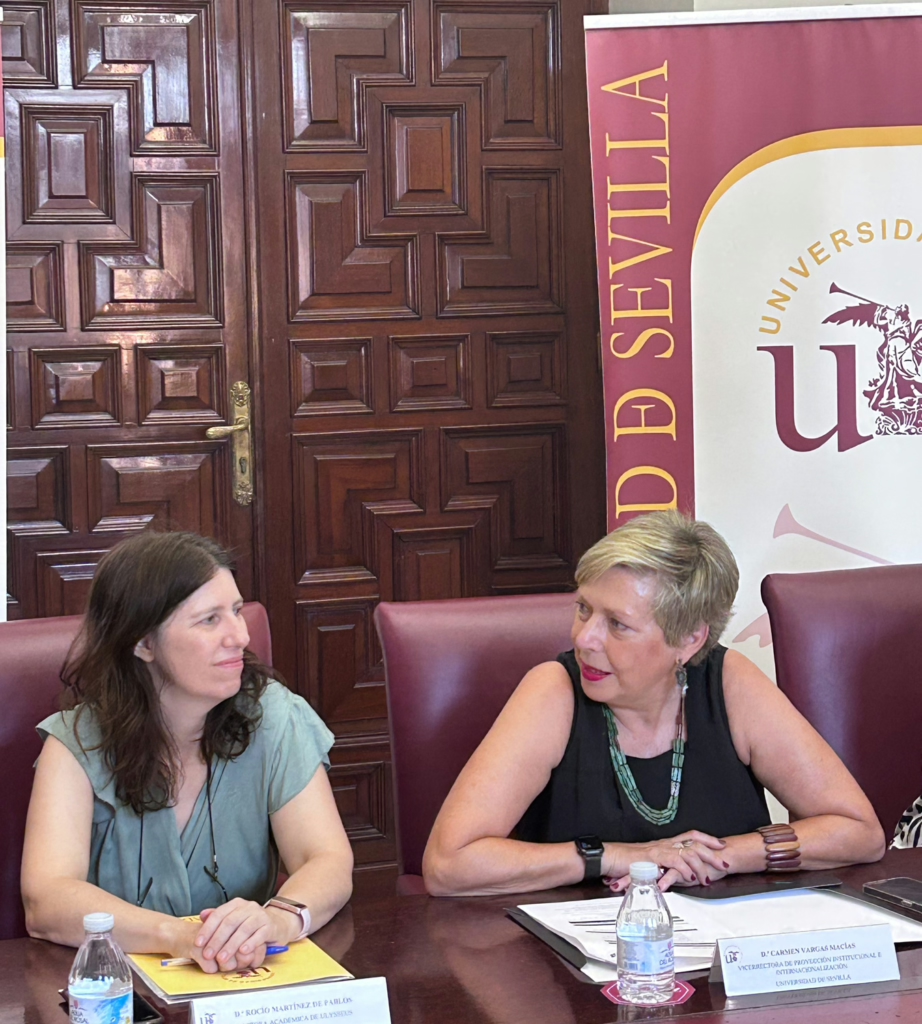
About NEEMA
NEEMA is a 36-month capacity building project of Ulysseus European University funded through the ERASMUS+ programme. It aligns with the European Green Deal and Farm to Fork Strategy, adapting these frameworks to the unique challenges of the Sahel and West Africa.
Led by the University of Seville, NEEMA aims to enhance food and nutritional resilience, focusing on vulnerable populations. The project involves 14 universities across Africa and Europe, fostering collaboration, designing contextual curricula, and launching pilot initiatives to strengthen local capacities in food security and sustainability.