



BIP Territorially based gastronomic products: New opportunities for experimental tourism

This course is aimed at anyone interested in exploring the relationship between territorial identity and gastronomy through a multidisciplinary approach in the search for new opportunities in experiential tourism.


The course is organised by the University of Seville – Andalusian Institute of Tourism Research and Innovation (IATUR), Spain; Haaga-Helia University of Applied Sciences, Helsinki, Finland; and the University of Genova, Italy.


Please be aware that your home university may set a different application deadline depending on their internal selection process.

Registration dates 10 July 2025 31 October 2025
Course dates 19 January 2026 23 January 2026
Registration is now closed
BIP Territorially based gastronomic products: New opportunities for experimental tourism

Course Outline

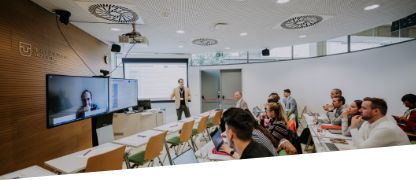
The course will combine theoretical and practical learning. Academic lectures will be delivered by faculty members and external professionals with expertise in gastronomic tourism and food technology. These will be complemented by guided visits to public institutions, associations, cooperatives, and private companies. Students will work in international teams and engage in collaborative assignments. Peer feedback will also be incorporated as part of the learning process.

Assessment will include:

  • A group written report, to be submitted before the start of the on-site component.
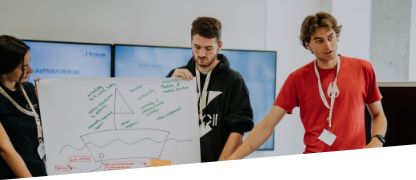
  • A group case study/presentation, to be developed during the on-site week and presented at the end of the programme.

Planned Activities:

The programme includes a wide range of academic and experiential learning activities, both during the virtual and on-site phases:

  • Lectures and Workshops: Interactive sessions on oleotourism, enotourism, and mycotourism, including contributions from technology professionals and local producers.
  • Educational and Cultural Visits: Tours of Seville’s historic landmarks, focusing on the intersection between cultural heritage and gastronomy.
  • Field Trip to Jerez de la Frontera: A full-day excursion to Jerez, where students will visit emblematic local producers of high-value gastronomic products. The experience will highlight the role of these businesses in shaping the territorial identity and economic development of the region, with a focus on sustainability, PDO/PGI certification, and innovation in agro-food tourism.
  • Group Project: Students will work on a real or simulated case related to agro-food tourism (e.g., an olive oil or wine route) and develop strategies for its sustainable
    development.

Course Content

The BIP will explore the relationship between territorial identity and gastronomy through a multidisciplinary approach, combining academic lectures, fieldwork, and hands-on activities. The course will focus on the following core topics:

  • Exploring local knowledge and traditions: methods for documenting and preserving culinary heritage through oral history and local practices.
  • Gastronomic tourism as a means to preserve, adapt, and promote local food heritage in both local and global markets.
  • The role of Protected Designations of Origin (PDO) and Protected Geographical Indications (PGI) in territorial branding and tourism development.
  • Development and promotion of niche gastronomic experiences, including wine tourism, olive oil tourism, and mycotourism.
  • Tools and methodologies for the valorization of locally-based gastronomy in tourism contexts.
  • Production and marketing processes at the regional and international level.
  • Best practices of small local producers, including the use of technology for networking, promotion, and revenue generation.
  • Internationalization strategies and positioning of local producers in global markets.
  • Unique practices of large producers of territorially-based products.

Learning Outcomes

Following this course, students will be able to:

  • Identify and apply methods for the documentation, preservation and enhancement of gastronomic heritage.
  • Design actions and create networks for the development, promotion and generation of revenue from gastronomic tourism experiences.

Requirements

Bachelor/Master/PhD students on:
Social Ciences, Journalism and Information; Business, Administration and Law; Natural Sciences, Mathematics and Statistics; Information and Communication Technologies; Agriculture, Forestry, Fisheries and Veterinary; and Services.

Fields of study falling under the following ISCED codes:
0300; 0310; 0311; 0314; 0319; 0400; 0411; 0413; 0417; 0419; 0520; 0521; 0610; 0619; 0800; 1000; 1013; 1015; 1041.

Agenda

Day 1 | January 19, 2026 (Monday)

Morning

Arrival and Welcome Coffee
Opening Session
Frontal lecture- “Local knowledge and traditions in Andalusian gastronomy”

Afternoon

Field Trips &  Cultural Visit


Day 2 | January 20, 2026 (Tuesday)

Morning

Workshop: “Introduction to Digital Tools for Mapping and Storytelling”

Afternoon

Teamwork – developing the projects: “Designing a Gastronomic Tourism Experience”
Flamenco Show


Day 3 | January 21, 2026 (Wednesday)

Full-Day Field Trip: Jerez de la Frontera

Day 4 | January 22, 2026 (Thursday)

Morning

Workshop: “Revenue management: good practices in restaurants and related businesses”.

Afternoon

Project Development: “Designing a Gastronomic Tourism Experience”
Farewell dinner

Day 5 | January 23, 2026 (Friday)

Final Presentations & Closing Session
End of on-site activities


Virtual Component

Day 1 | December 9, 2025 (Tuesday)

  • Welcome, introduction of the academic staff, and e-presentation formation of student groups
  • Local knowledge and traditions
  • Gastronomic heritage and territorially based products

Day 2 | December 10, 2025 (Wednesday)

  • Protected Designations of Origin (PDO) and Protected Geographical Indications (PGI) in territorial branding and tourism
  • Multisensory experience through food products and relation with tourism
  • Leveraging emerging technologies for positioning, selling, and analysing consumer perception of gastronomic and tourism products

Day 3 | December 11, 2025 (Thursday)

  • Introduction to Digital Tools for Mapping and Storytelling
  • Revenue Management: from concepts to implementation. Enhancing revenue generation in restaurants through diverse gastronomic
    activities

Day 4 | December 12, 2025 (Friday)

Discussion-Group Project Activity-Task:” Designing a Gastronomic Tourism Experience: From Local Flavor to Tourist Experience: Group Challenge”

Professors

  • Reyes González Relaño – University of Seville – Instituto Andaluz de Investigación e Innovación en Turismo (IATUR) rgrelano@us.es
  • Esther Chávez Miranda- University of Seville – Instituto Andaluz de Investigación e Innovación en Turismo (IATUR). Director of Hotel Revenue Management Diploma
    esther@us.es
  • Juan Luis Blanco Guzman- University of Seville – Instituto Andaluz de Investigación e Innovación en Turismo (IATUR) jbguzman@us.es
  • Vicente Casales – University of Seville – Instituto Andaluz de Investigación e Innovación en Turismo (IATUR) vcasales@us.es
  • Stefania Mangano – University of Genova stefania.mangano@unige.it
  • Daniela Ambrosino – University of Genova daniela.ambrosino@unige.it
  • Leonardo Porcelloni – University of Genova leonardo.porcelloni@edu.unige.it
  • Sini Garam – Haaga-Helia University of Applied Sciences Sini.Garam@haagahelia.fi
  • Opri Laamanen – Haaga-Helia University of Applied Sciences Opri.Laamanen@haaga-helia.fi
  • Marja Paajanen – Haaga-Helia University of Applied Sciences Marja.Paajanen@haaga-helia.fi

Application Process

The deadline for the reception of applications is approximately one month before the start of the mobility. Later applications can be accepted only with the approval of the BIP organisers. Please consider the dates of your home institution in case you need a mobility agreement.

22 Erasmus+ BIP participants and 3 non-BIP participants from the University of Montenegro, not including lecturers, expert guests, local participants, etc. (2-3 slots per Ulysseus university including Montenegro). Also 2-3 slots for local participation.

Numbers may vary depending on the possibility of each university to send participants.

More information