



BIP Artificial Intelligence for Young Tourism Entrepreneurs and Researchers

This BIP offers both students (undergraduate, master and PhD) and researchers a dynamic and inspiring learning experience about new learning, research and business opportunities emerging in the tourism industry thanks to artificial intelligence.


The program focuses on developing skills for identifying, analyzing, and creating emerging businesses as well as research projects in tourism, with a special focus on the use of AI to create disruptive solutions that foster industry-academy interactions and knowledge transfer, transform the customer experience and generate new business opportunities, research projects development and collaborative networks creation.


Please be aware that your home university may set a different application deadline depending on their internal selection process.

Registration dates 10 July 2025 24 October 2025
Course dates 24 November 2025 28 November 2025
Registration is now closed
BIP Artificial Intelligence for Young Tourism Entrepreneurs and Researchers

Course Outline

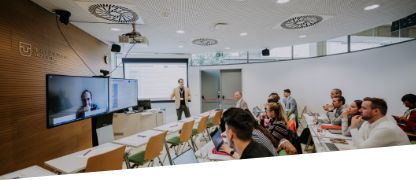
This BIP is structured around a blended learning approach that combines virtual sessions with an intensive in-person week. Participants will work both individually and in international multidisciplinary teams, focusing on the application of Artificial Intelligence in the tourism sector.

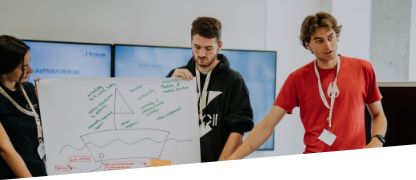
During the virtual phase, students will engage with theoretical content through a synchronous materials and complete individual reflection and assessment tasks to ensure understanding of core concepts. In the physical phase, participants will collaborate in teams to develop an innovative business idea or research mini-project applying AI to solve real challenges in the tourism industry. Throughout the week, they will attend expert-led sessions, engage in field visits, and participate in practical workshops.

At the end of the course, students will be expected to:

  • Submit a group project, which can take the form of a business pitch or a research-based proposal.
  • Present their work during a public business and research forum before a panel of experts, with awards for the most innovative ideas.

Course Content

The main topics addressed in this BIP include:

  • Introduction to Artificial Intelligence and its types.
  • AI for tourism innovation: transforming services, products, and customer experience.
  • AI for business creation: identifying entrepreneurial opportunities and designing viable solutions.
  • AI in tourism research: tools and techniques for academic investigation (e.g., data mining, sentiment analysis, forecasting models).
  • Personalization and customer behavior analysis through AI
  • Ethics and responsibility in AI: privacy, bias, and sustainability
  • Emerging trends and future scenarios in AI and tourism
  • Scientific communication and project pitchin

Learning Outcomes

Following this course, students will be able to:

  • Understand the fundamental concepts of Artificial Intelligence and its main applications in tourism.
  • Analyze opportunities for innovation and entrepreneurship driven by AI.
  • Apply AI tools and techniques to develop tourism-related projects or research ideas.
  • Work collaboratively in multicultural teams, applying problem-solving and creativity.
  • Evaluate ethical challenges associated with AI in tourism contexts.
  • Design and communicate a business plan or research proposal using AI-based insights.
  • Present their work effectively in a public forum to both academic and industry audiences.

Requirements

To be eligible for this BIP, participants must meet the following requirements:

Academic Level:

  • Bachelor’s degree students
  • Master’s degree students
  • PhD candidates
  • Alternatively, early-stage researchers or academic staff may participate if selected by their home institution


Academic Background:
The BIP is aimed at individuals studying or working in areas related to:

  • Business and Administration
  • Tourism, Hospitality, and Leisure
  • Interdisciplinary programmes involving management, innovation, or technology
  • Other related fields with a clear motivation for applying AI to tourism


Language Proficiency:

  • Minimum English level: B2 (CEFR)
  • Recommended: C1, especially for academic staff or participants intending to contribute to research discussions
  • Participants must be able to follow lectures, engage in teamwork, and present their final project in English.

Agenda

Day 1

10:00 – 13:00

  • Welcome and Group Dynamics
  • Presentation of the BIP programme, professors, and participants
  • Activities focused on group integration and intercultural exchange

13:00 – 14:00 Lunch
14:00 – 17:00 Introduction to AI in Tourism | Exploration of key AI concepts and their applications in tourism innovation, business, and research.


Day 2

10:00 – 13:00

  • AI for the Creation of Emerging Businesses and Personalization in Tourism
  • Identification of business opportunities enabled by AI.
  • Analysis of tools and methods to personalize the tourist experience using artificial intelligence.

13:00 – 14:00 Lunch
14:00 – 17:00 Tour of the city of Seville. Guided visit to emblematic sites in Seville, including historical, cultural, and economic insights.

Day 3

10:00 – 13:00

  • Workshop: Research Techniques in Tourism and Artificial Intelligence
    Practical session focused on methods and tools for applied research using AI in tourism contexts. Includes an overview of techniques such as data mining, sentiment analysis, forecasting, and use of open datasets.

13:00 – 14:00 Lunch
14:00 – 17:00 Teamwork: Project Development Teams begin developing their business idea or research proposal, applying the concepts and tools throughout the week.


Day 4

08:00 – 18:00 (approx.) Field Visit (subject to final confirmation)

20:00 – 22:00 Farewell dinner & Informal networking event to close the programme.

Day 5

10:00 – 13:00 Teamwork: Project Development
13:00 – 15:00 Lunch
14:00 – 17:00

  • Business and Research Forum: Project Presentations
  • Final project presentations by student teams (either business-oriented or research-focused) before a panel of academic and industry experts.
  • Evaluation and recognition outstanding contributions.

Virtual Component

Dates: 03/11/25 to 05/11/25 (TBD)
Format: Two live online sessions (total: 5 hours)

Organization:
The virtual component will be delivered synchronously via MS Teams. Access links and schedule details will be provided one week in advance. Participation is mandatory for all selected students and staff.

Content:
This phase is designed to foster initial interaction and ensure all participants share a common understanding before the on-site activities begin. The sessions will serve as an introduction to the programme. They will include:

  • Presentation of the course structure, objectives, and evaluation criteria.
  • Introduction of teaching staff and participants.
  • Overview of key concepts in artificial intelligence and its relevance to tourism.

Professors

  • Jeisson A. Higuera Reina (University of Seville) – BIP coordinator
  • Juan Luis Blanco Guzmán (University of Seville) – BIP coordinator
  • Antonio García Sánchez (University of Seville)
  • Loijas Jouko (Haaga-Helia University of Applied Sciences)
  • Aarni Tuoni (Haaga-Helia University of Applied Sciences)

Application Process

Participants interested in joining this BIP must apply through the Ulysseus Local Mobility Officer at their home institution. Each university will manage its own internal selection process and may set earlier deadlines, so students and staff are encouraged to contact their mobility officer as soon as possible.

Application Deadline:
The hosting university (University of Seville) must receive the final list of selected participants by October 24th, 2025.

Later applications can be accepted only with the approval of the organisers. Please consider the dates of your home institution in case you need a mobility agreement. Additional documentation may be requested depending on the internal requirements of each partner university.

More information