
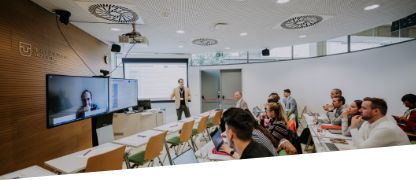





Ulysseus Alliance Publishes Language Policy
The Ulysseus European University Alliance has published its comprehensive Language Policy, a huge step forward in promoting multilingualism and intercultural competence across European higher education.
© Adobe Stock
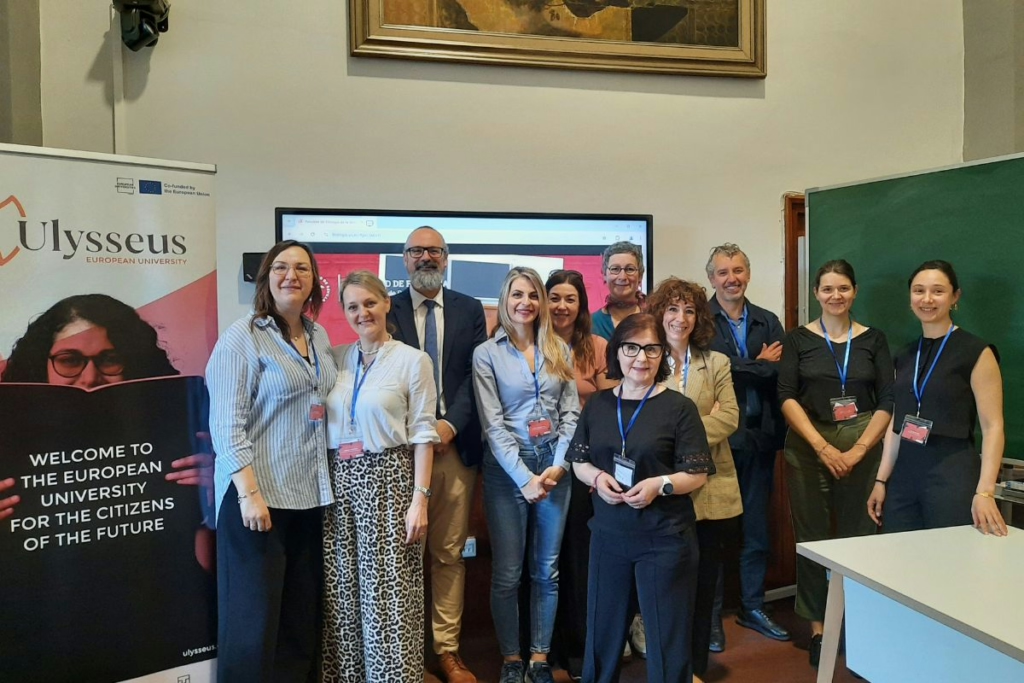
The policy was developed by a dedicated Language Policy working group led by Haaga-Helia University of Applied Sciences, with members from all partner universities contributing their expertise and perspectives.
Lingua-culture gives you a voice
The policy establishes a framework for building a vibrant, polylingual academic community where linguistic diversity and cultural heritage are actively valued. At its core is the innovative lingua-culture approach, which goes beyond traditional language learning by recognizing the symbiotic bond between language, social context, and culture.
This approach understands language, both verbal and non-verbal, not merely as a communication tool but as a symbolic repository of socio-cultural knowledge, beliefs, and values. It promotes intercultural and translanguaging communication, enabling bilinguals and multilinguals to move dynamically across their linguistic repertoires rather than viewing languages as separate, hierarchical entities.
The lingua-culture approach aims to give voice to all participants in the Ulysseus community, respecting all languages, language varieties, and language skills regardless of proficiency level. It addresses the reality that language skills at a specific CEFR level do not automatically guarantee effective cross-cultural communication, emphasizing instead the importance of communicative skills, mediation competence, and cultural awareness to navigate diverse contexts successfully.
Key objectives of the policy
Vibrant polylingual academic community: Fostering a community that values linguistic diversity and equality, integrating the lingua-culture approach to strengthen mutual understanding and enhance academic excellence.
Balanced use of all alliance languages: Promoting the use of all official alliance languages (Finnish, French, German, Italian, Montenegrin, Slovak, and Spanish) alongside and beyond English in teaching, research, and administrative activities, while guaranteeing accessible academic and support services in both local languages and English.
Comprehensive language learning opportunities: The Ulysseus +2 Language Programme offers diverse courses in all alliance languages plus Arabic, Chinese, English, and Russian, making it one of the largest language programmes among Europe’s 65 university alliances. The alliance also organizes Blended Intensive Programmes focusing on multilingualism and intercultural competences.
Multilingual, multicultural and interdisciplinary joint studies: Raising awareness of Languages Across the Curriculum and the importance of bilingual, multilingual, and multicultural joint study opportunities to enhance mobility and internationalization.
From policy to practice
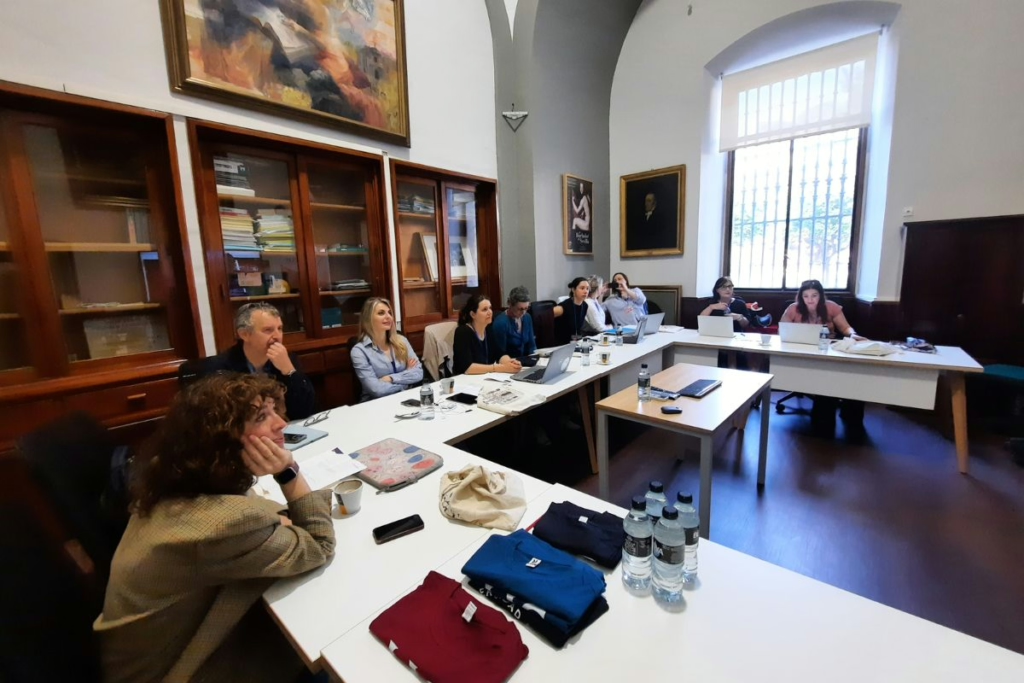
The policy includes practical recommendations for implementation, covering areas such as the continuous development of the +2 Language Programme, collaboration among language teachers, equal support for mobility (both physical and virtual), and strengthening intercultural relationships through tandems, buddy programmes, and cultural exchange activities.
This policy is not a static document, but a living strategy that will evolve simultaneously with the alliance and its communities. Ongoing monitoring, reflection, and inter- and transcultural dialogue will be key to its successful implementation.
The policy stands out among European University Alliances, as recent research shows that while 32 out of 65 European University alliances mention multilingualism as a core value, only 11 have made their language policies publicly available as of March 2025 (Angouri & Delmas, 2025).
Next Steps
The Language Policy will be translated into all alliance languages by the end of 2025 and disseminated across partner universities and externally. The alliance hopes it will serve as a model for other European university alliances when defining their own language policies.
About Ulysseus
Ulysseus is one of the 65 European Universities selected by the European Commission to become the universities of the future. Led by the University of Seville, the Alliance encompasses other seven universities in Europe: the University of Genoa, Italy; Université Côte d’Azur, France; the Technical University of Košice, Slovakia; MCI | The Entrepreneurial School®, Austria; Haaga-Helia University of Applied Sciences, Finland, the University of Münster, Germany, and the University of Montenegro, Montenegro.