




RIGO Final Events: Real Conversations on Virtual Mobility Preparation
As the RIGO project draws to a close, its final months have focused on sharing what has been developed and observing how it is received in practice. Through a series of local multiplier events organized across the partner universities, the project outcomes were presented to students, staff, and external audiences, with a particular emphasis on hands-on engagement with the VR scenarios.
Local Multiplier Events Across the Consortium
Across the 4 local partner institutions, we gained further insights on the projectʼs central idea: Using immersive VR environments to support preparation for international mobility. Delivered as part of Work Package 4, the local multiplier events combined project presentations with direct interaction.
Participants were introduced to the RIGO approach and invited to test the VR scenarios themselves, creating space not only for demonstration but also for discussion and reflection.
Technical University of Košice (Slovakia)
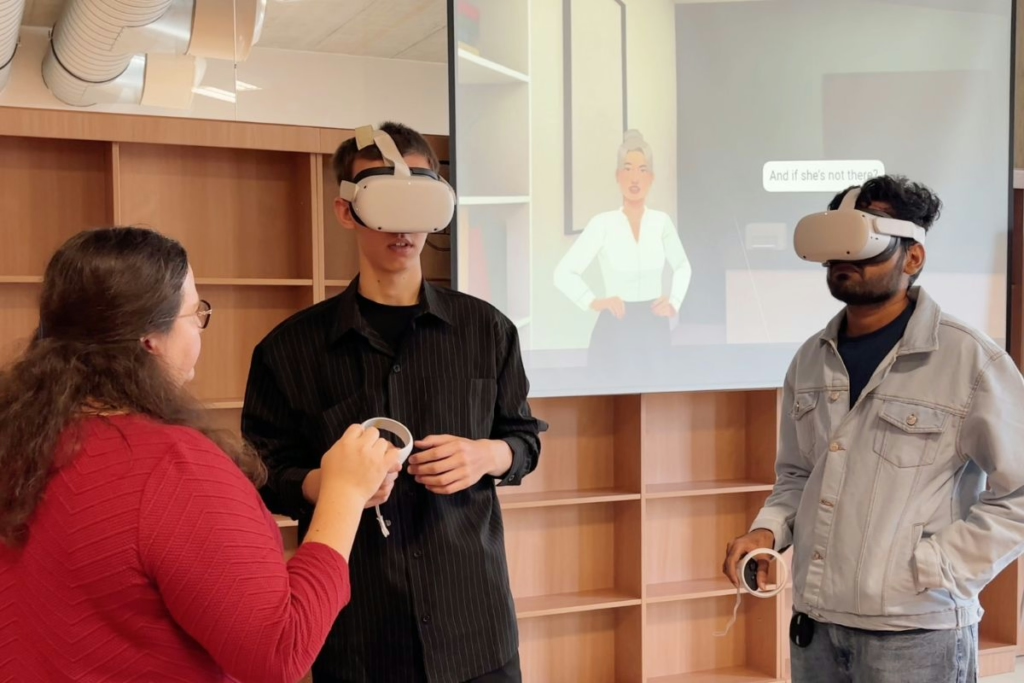
At the Technical University of Košice (TUKE), RIGO was presented during Erasmus Day on 13 October 2025 in a local multiplier event hosted in the university library. Around 180 students attended, including many international students. The programme introduced the projectʼs objectives, explained how the scenarios were developed, and included a hands-on VR component.
Approximately 30 participants tested the VR scenarios directly. Feedback showed strong interest, particularly in the possibility of exploring different situations related to everyday challenges of mobility. To extend the reach of the event, the local team also produced a short video that was shared via institutional social media channels.
MCI Innsbruck (Austria)
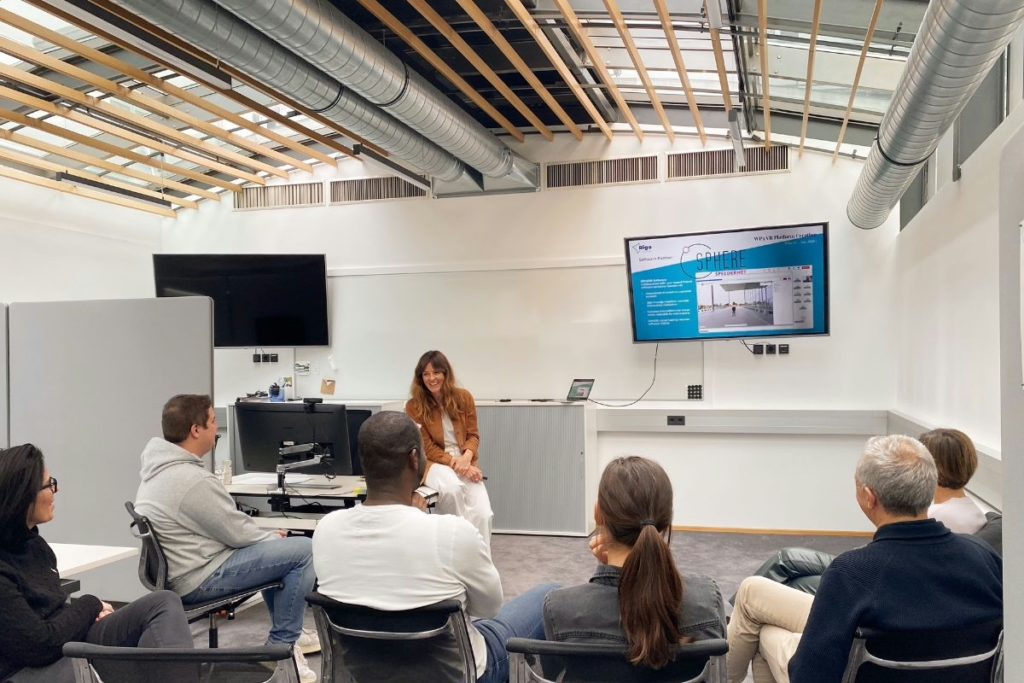
At MCI The Entrepreneurial School®, dissemination took place through three targeted multiplier events between October and December 2025.
These were tailored to different audiences: international students during the Internationals Welcome Day, the general public at the Tiroler Hochschultag open-door event, and academic and administrative staff at a dedicated internal session.
Across all three events, participants were able to test the VR prototypes alongside project presentations. Engagement was consistently high, particularly among staff, who identified concrete opportunities to use the locally developed scenarios in future internationalization, communication, and marketing activities. This indicated clear interest in continued use beyond the project period.
Haaga-Helia University of Applied Sciences (Finland)
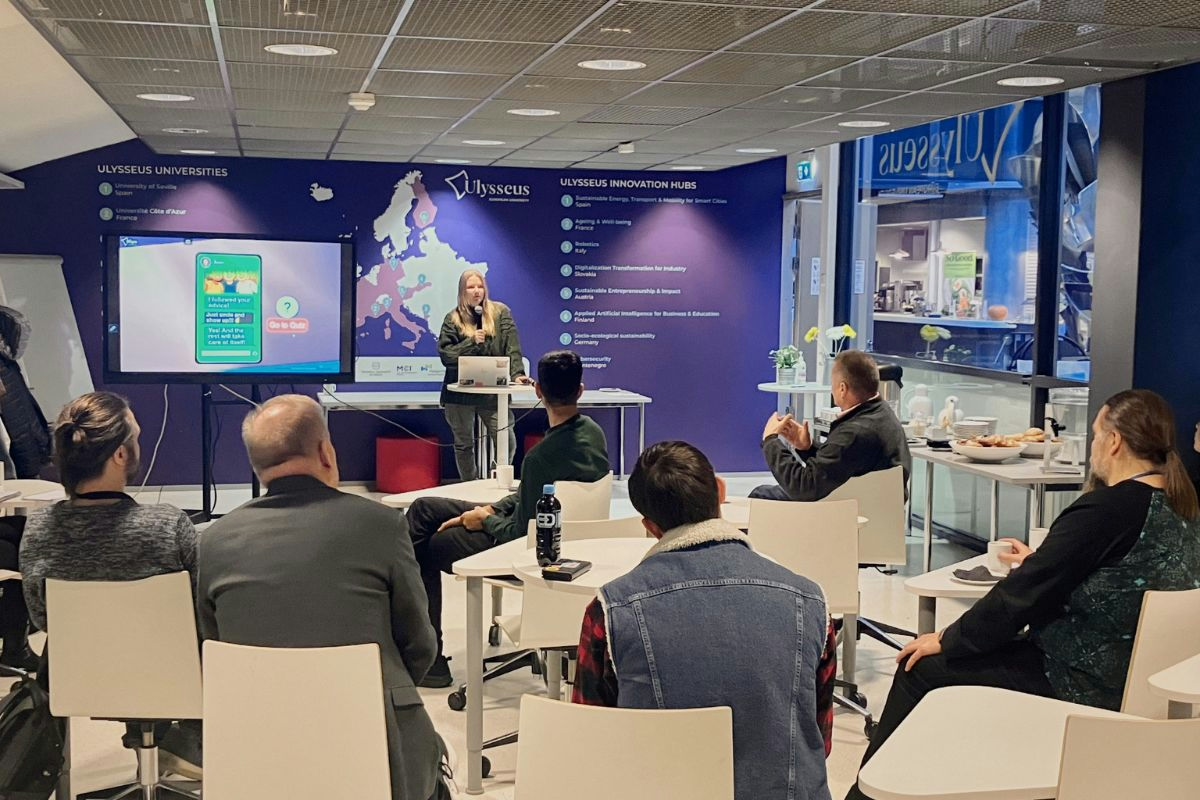
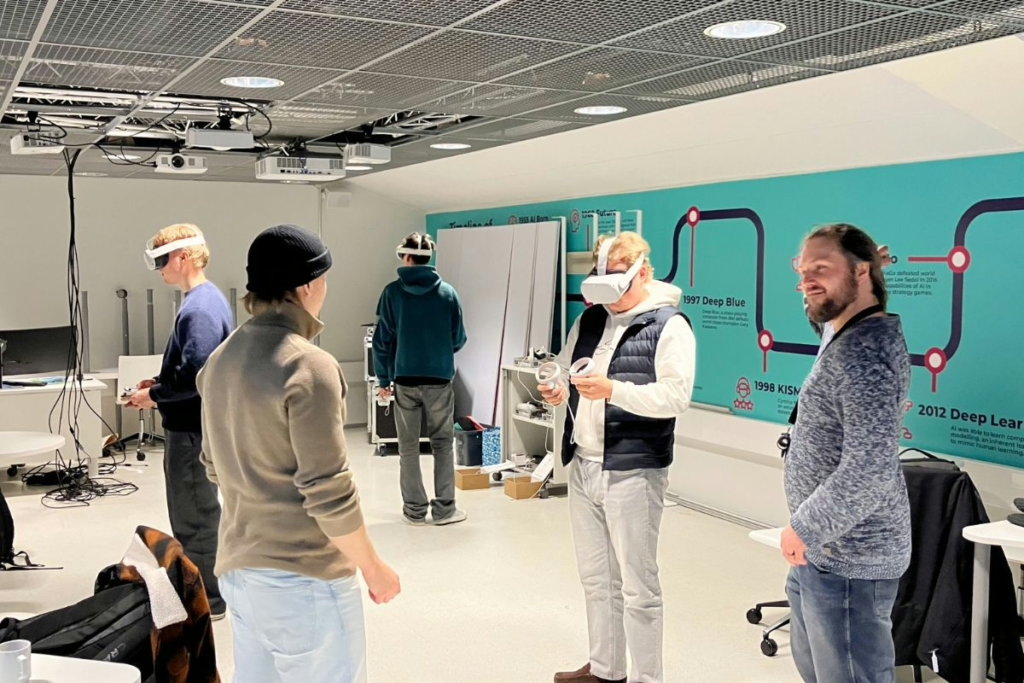
Haaga-Helia University of Applied Sciences hosted an all-day multiplier event on 14 November 2025. The program combined a seminar on the RIGO project and its co-creation process with live demonstrations and extended hands-on testing of both the VR scenarios and desktop versions.
Around 80 students participated throughout the day, alongside 20–30 staff members. Discussions were lively and reflective, with participants commenting on the realism of the scenarios and their relevance to students preparing for mobility. There was clear interest in the full release of the platform and in possibilities for further development and institutional integration.
Université Côte dʼAzur (France)
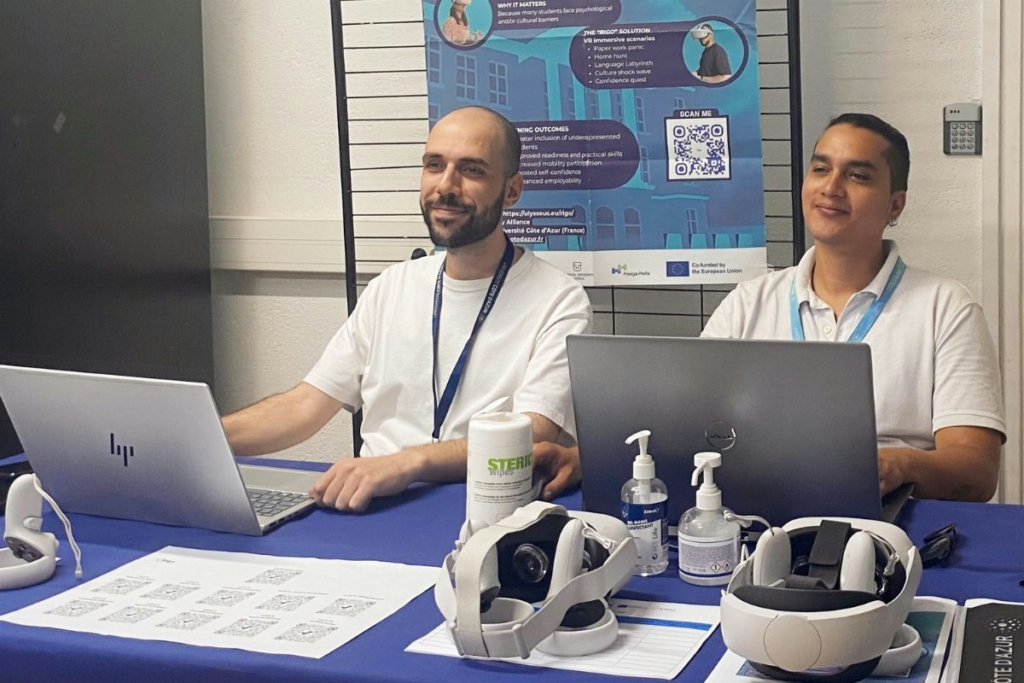
At Université Côte dʼAzur, RIGO was disseminated during the Erasmus Days+ event “Dare Erasmus!ˮ on 13 October 2025 at the Carlone campus. The project was presented within a plenary session focused on international mobility and career perspectives, reaching around 50 participants.
In addition, a dedicated RIGO stand offered VR demonstrations throughout the afternoon. This allowed visitors to engage with the scenarios informally and at their own pace. The projectʼs experiential approach fitted well within the broader event, prompting interest in how immersive tools might complement existing mobility preparation practices.
Insights from the Dissemination Phase
- Across all partner institutions, several common observations emerged from the multiplier events:
- Participants consistently valued direct interaction with the VR scenarios over purely descriptive presentations.
- Students highlighted the usefulness of immersive preparation for understanding practical, cultural, and administrative aspects of going abroad.
- Staff identified clear institutional use cases, particularly in orientation, student support, and international communication.
- Simple and intuitive design was repeatedly noted as essential for accessibility and meaningful engagement.
- These points echoed insights from earlier phases of the project and suggested that the scenarios addressed recognizable needs rather than abstract assumptions.
Concluding Note
From co-creation to local dissemination, RIGO followed an iterative approach grounded in real institutional contexts. While the project is concluding, the scenarios developed and the interest generated suggest that its outcomes will continue to inform approaches to international mobility preparation.
About RIGO
Launching in September 2023, the 36-month project promises an exciting digital transformation for partner universities, leveraging innovative learning practices with VR technology. Beyond enhancing digital skills, the project tackles inclusion and diversity in education, facilitating the preparation of students who, due to socio-economic or physical constraints, have been deprived of international experiences. The RIGO project welcomes a digital future of inclusive international mobility. Follow our transformative journey!
About Ulysseus
Ulysseus Alliance vision for 2030 is to develop an excellency-recognized and internationally attractive open to the world, people-centered and entrepreneurial European University for the citizens of the future. By doing so, our ambition is to contribute to shape the European Higher Education and Research Areas, and hence the future of Europe.
Ulysseus is one of the 41 European Universities selected by the European Commission to become the universities of the future. Led by the University of Seville together with seven other universities in Europe (the University of Genoa, Italy; Université Côte dʼAzur, France; the Technical University of Košice, Slovakia; MCI | The Entrepreneurial School®, Austria; Haaga-Helia University of Applied Sciences, Finland; the University of Münster, Germany; and the University of Montenegro, Montenegro), the project will allow students, researchers and graduates to move freely between universities, carry out internships in companies and start high-impact research projects.