




RIGO Dissemination at MCI: Bringing VR Mobility to Students
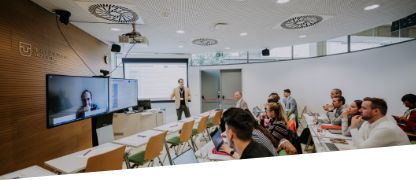
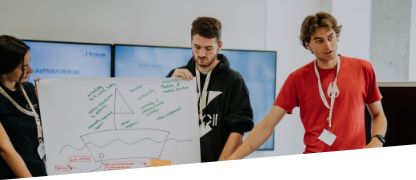
MCI recently showcased the final RIGO prototype and its virtual mobility scenarios to international students at two major events. The response was highly positive, highlighting the strong interest among young learners in immersive VR experiences. Valuable insights were gained on how to further improve the user experience and make the VR scenarios even more engaging for future learners.
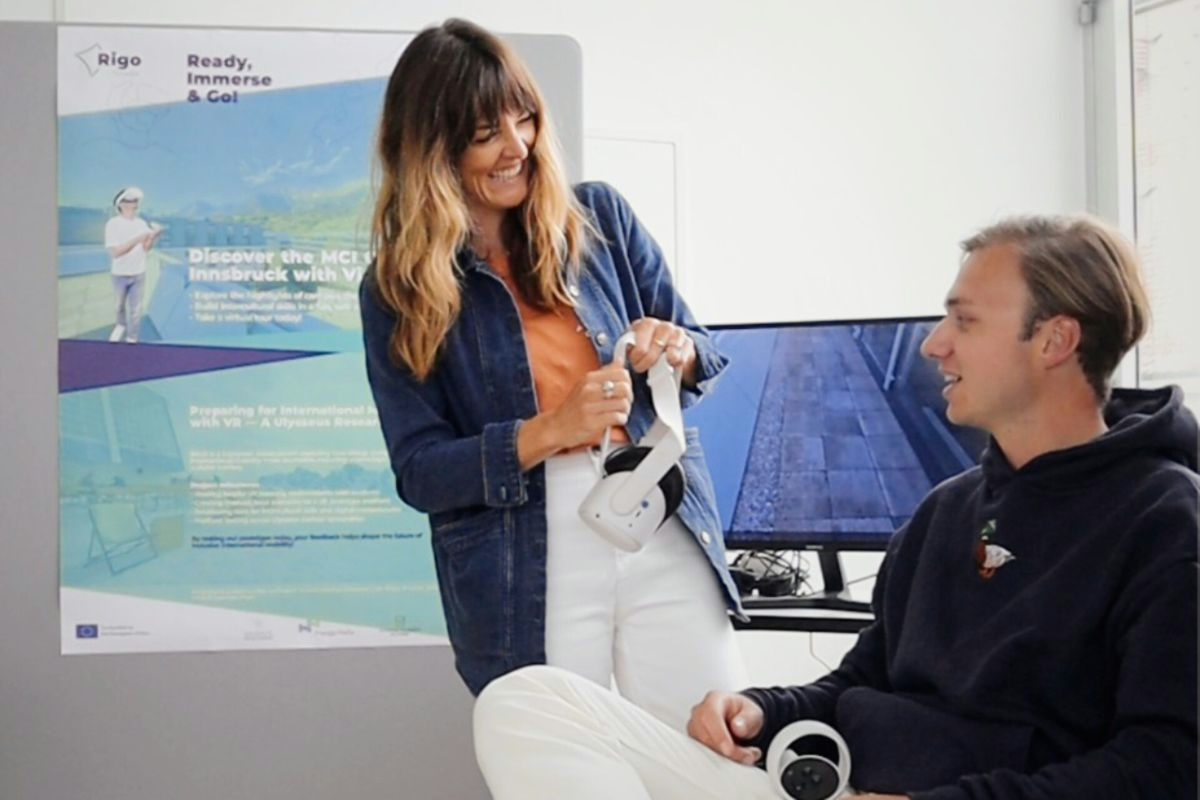
Bringing RIGO to Campus: Engaging with Students at 2 MCI Events
Over the past weeks, MCI has taken an important step in bringing the RIGO project closer to its core audience: international and prospective students preparing for, or simply curious about mobility experiences. With the final prototype and the newly developed virtual scenarios now ready for testing, the MCI team showcased RIGO twice to both incoming international students and those considering MCI for their future studies.
The first presentation took place on 1 October 2025 during the Welcome Day for International Students. Developed in close collaboration with the International Relations Office, the MCI-specific scenarios address typical questions and challenges that arise when supporting new students. At the Welcome Day, participants were able to familiarize themselves with their new environment on the Innsbruck campus, both on site and through immersive VR.
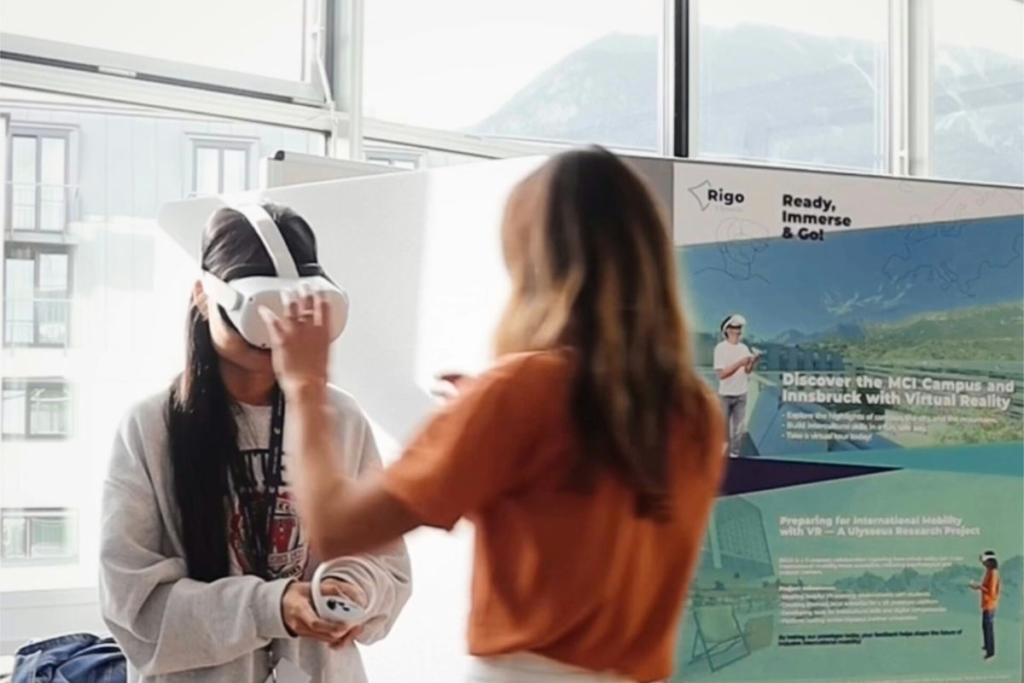
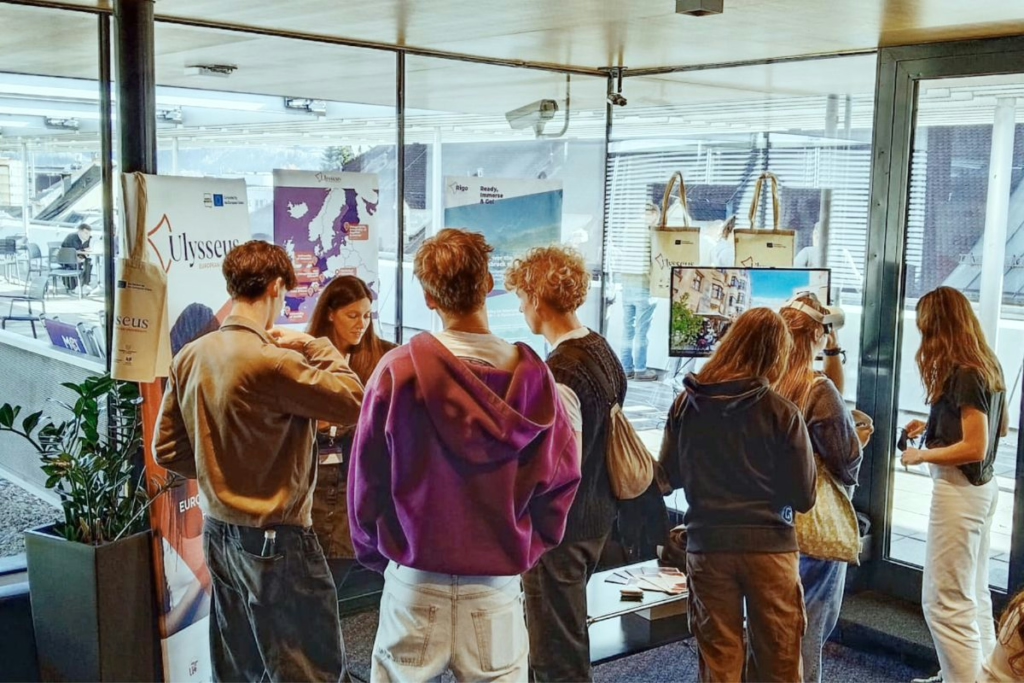
A second dissemination opportunity followed on 6 November 2025 at the Tiroler Hochschultag open house event. Presented jointly with the Ulysseus Team, this session introduced RIGO to prospective students while highlighting MCIʼs role within the Ulysseus alliance and our shared commitment to strengthen mobility and innovation in European higher education.
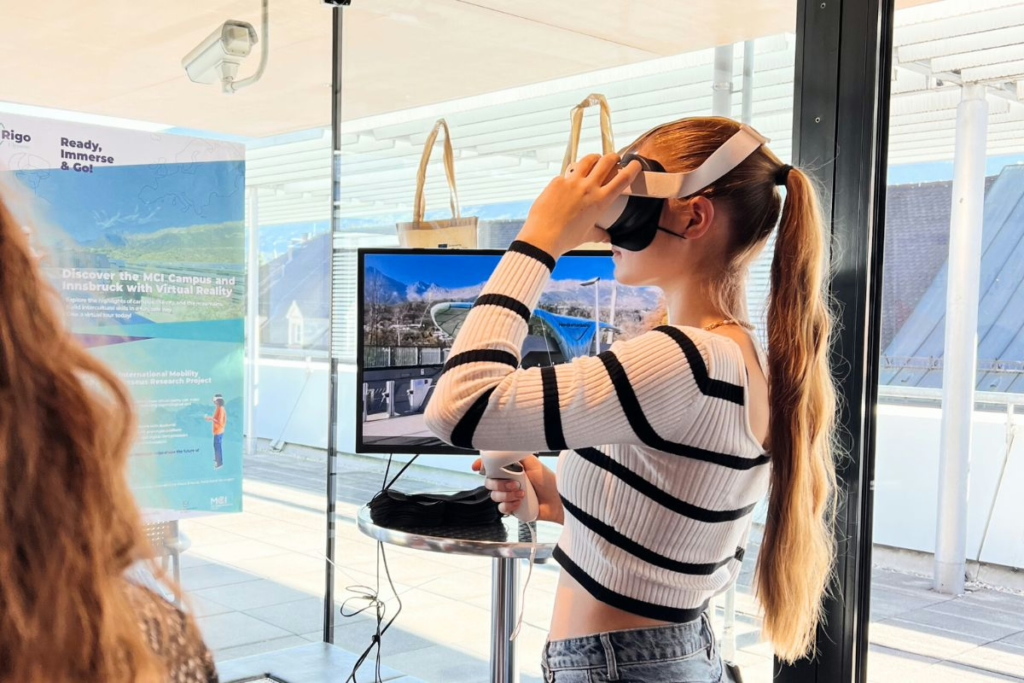
Across both events, students were invited to experience the immersive VR scenarios with headsets, offering them a first-hand glimpse into the potential of RIGOʼs virtual learning environments.
What Students Loved and What We Learned
The feedback from participants was overwhelmingly positive. Many students showed strong curiosity, especially toward the VR headset version of the scenarios. For some, stepping into VR was entirely new; others were already familiar with immersive technologies but still found themselves captivated by the realism and atmosphere. An additional key insight also emerged: while sound design enriches the experience, busy event settings can make audio difficult to follow. To strengthen accessibility and inclusivity, future iterations should include both voice options and transcribed on-screen text.
The scenarios proved particularly valuable for students who had just arrived in Innsbruck or were unfamiliar with the region. For them, the virtual environments offered orientation, practical guidance, and a sense of reassurance – affirming RIGOʼs goal of reducing barriers to international mobility. At the same time, the playful and exploratory nature of VR resonated strongly with digital natives, turning information into an engaging and memorable learning experience.
Whatʼs next
In the next step, the MCI team will share insights from the full RIGO research and development process alongside the prototype with colleagues and the broader educator community, contributing to continued dialogue on innovative, future-oriented learning practices.
About RIGO
Launching in September 2023, the 36-month project promises an exciting digital transformation for partner universities, leveraging innovative learning practices with VR technology. Beyond enhancing digital skills, the project tackles inclusion and diversity in education, facilitating the preparation of students who, due to socio-economic or physical constraints, have been deprived of international experiences. The RIGO project welcomes a digital future of inclusive international mobility. Follow our transformative journey!
About Ulysseus
Ulysseus Alliance vision for 2030 is to develop an excellency-recognized and internationally attractive open to the world, people-centered and entrepreneurial European University for the citizens of the future. By doing so, our ambition is to contribute to shape the European Higher Education and Research Areas, and hence the future of Europe.
Ulysseus is one of the 41 European Universities selected by the European Commission to become the universities of the future. Led by the University of Seville together with seven other universities in Europe (the University of Genoa, Italy; Université Côte dʼAzur, France; the Technical University of Košice, Slovakia; MCI | The Entrepreneurial School®, Austria; Haaga-Helia University of Applied Sciences, Finland; the University of Münster, Germany; and the University of Montenegro, Montenegro), the project will allow students, researchers and graduates to move freely between universities, carry out internships in companies and start high-impact research projects.