



Metacog Webinar: In Noise We Trust? AI, Disinformation, and Democracy across Europe

Metacog Webinar: In Noise We Trust? AI, Disinformation, and Democracy across Europe

In an era of AI-generated content and accelerating information disorder, the line between reliable information and manufactured noise has never been harder to draw. This webinar brings together experts from the METACOG project to examine how disinformation operates across different European (or global) contexts, how AI is both fueling and helping counter it, and what fact-checking looks like in practice when civic information is at stake. Join us for European perspectives and a conversation about what information integrity means today.

About this event

Disinformation does not look the same everywhere. The sources, the channels, the social contexts, and the stakes differ significantly depending on where you are in Europe. This webinar takes a cross-country approach, drawing on research and experience from the Montenegro and Slovakia to show how AI-driven disinformation is reshaping civic information landscapes, and what can be done about it. 

Through three focused presentations and a Q&A session, participants will gain practical insight into fact-checking methodologies, the specific pressures facing information ecosystems under geopolitical strain, and how AI tools are being developed to detect and counter disinformation, including through the METACOG project.

What You’ll Learn:

  • How fact-checking works in civic and electoral contexts and why it is increasingly difficult 
  • How foreign influence operations exploit information vulnerabilities in smaller European democracies 
  • How AI is used to generate disinformation at scale, and what tools are being built to counter it 

Who Should Attend:

  • University educators and students interested in media literacy and AI 
  • Media professionals and fact-checkers 
  • Policy practitioners and civil society organisations working on information integrity 
  • Anyone concerned about the impact of AI on public information in Europe 

Programme

  • Welcome and Introductions by Sari Korhonen, Haaga-Helia University of Applied Sciences 
  • AI as Threat and Tool: Detecting Disinformation in Central Europe by Daniel Hládek, Technical University of Košice 
  • Information Integrity in a Shifting Global Environment: The Western Balkans Context by Vuk Vuković, University of Montenegro 
  • Q&A session: Participants are encouraged to ask questions about the presentations, share their own experiences, and explore how METACOG’s resources can support their work on information integrity. 

Speakers

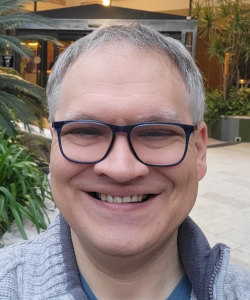
Sari Korhonen

Sari Korhonen portrait

Haaga-Helia University of Applied Sciences

Sari Korhonen is a Senior Lecturer in Law at Haaga-Helia University of Applied Sciences. She leads the Metacog project in Haaga-Helia.
She is also a Ph.D. researcher at the University of Eastern Finland, where her doctoral research focuses on the accessibility of legal information. She is an experienced teacher with pedagogical qualifications and holds a Master’s degree in Administrative Sciences with a specialization in Public Law.

Her research actively explores the right to correct and accessible information in digitalizing societies. Her areas of expertise lie at the intersection of law and digital technology (Legal Tech) and design (Legal Design). In addition to her academic qualifications, she has more than 15 years of experience in various leadership and development roles in the business sector. She has a particular interest in leveraging the positive impacts of human‑centred digitalization.

Daniel Hládek

Daniel Hládek

Technical University of Košice, Department of Computer Networks 

Daniel Hládek is an Associate Professor at the Technical University of Košice, Slovakia, specializing in artificial intelligence and natural language processing. He holds master’s and doctoral degrees in artificial intelligence from the same university and has authored or co-authored more than 100 scientific articles. His research focuses on language technologies, particularly the development and evaluation of resources and methods for Slovak. His work spans automatic spelling and grammatical error correction, multilingual question answering, and language understanding benchmarks. He also investigates neural network methods and their applications to text and speech processing. 

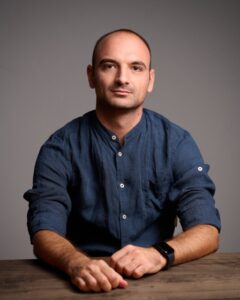
Vuk Vuković

Vuk Vuković

University of Montenegro 

Vuk Vuković graduated from the Faculty of Dramatic Arts in Belgrade,
where he also earned his PhD in media and communication management. He
has taught at the University of Montenegro since 2009 and was appointed
Associate Professor of Film and Media in 2022. Since 2023, he has also
served as Visiting Professor at the University of Arts in Belgrade,
teaching Digital Transformation of Media and Culture within the UNESCO
Chair’s international Master’s programme. His academic and professional
expertise encompasses digital media, cultural production, communication
management, and higher education quality assurance. He has held several
academic and leadership positions, including Vice-Dean for Academic
Affairs, and is the author of Social Media and Communication Management
(2019). He currently serves on the Management Board of the University of
Montenegro as a representative of the academic community in the field of
arts. 

About METACOG

METACOG is an EU-funded AI literacy programme designed to combat disinformation and fake news by promoting civic engagement and shared European values.

The initiative aims to strengthen citizens’ ability—particularly among higher education students and teachers—to recognize and respond to disinformation through an innovative curriculum, AI-based tools, and best practices.

By acknowledging the dual role of artificial intelligence in both generating and countering disinformation, METACOG seeks to empower individuals with the critical thinking and digital literacy skills essential for navigating today’s information landscape.

METACOG is led by Haaga-Helia University of Applied Sciences (Finland) in collaboration with the Technical University of Košice (Slovakia), the University of Montenegro (Montenegro), and The Hague University of Applied Sciences (The Netherlands).

Funding

The project is funded under the Erasmus+ Programme (KA220-HED) and will run from 1 September 2024 to 31 August 2027.

More information