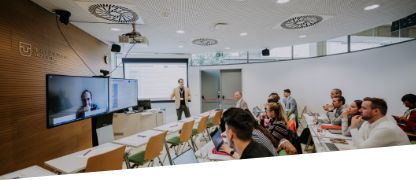
The lecture “Wellbeing in Smart Cities: KPI & Local Policies” examines how quality‑of‑life data indicators, urban scenarios, and participatory methodologies can guide more inclusive and evidence‑based urban policies. By juxtaposing the Italian and Japanese state‑of‑the‑art, the session highlights complementary approaches to measuring urban wellbeing and the potential of integrated analytical systems for understanding contemporary urban complexity.
The session opens with the case study of “Controllo Dynamico”, a urban dashboard that dynamically integrates 160 open‑data on urban environment, infrastructure, society, and economy, enabling comparative assessments of attractiveness, inclusiveness, and development across major Italian cities.
Then the Japanese Liveable Wellbeing City Indicators project, which combines objective measures of service quality with subjective perceptions of happiness and life satisfaction, revealing a innovative measurement system of wellbeing.
Following the case study of “SEAGUL”, a prototype multilayer dashboard that transforms sub‑municipal georeferenced data into indicators and scenarios supporting local governance and proximity‑based policies.
Finally, an outline of the role of co‑design and Living Labs processes in capturing the nuanced “voice” of local territories, translating emerging evidence into targeted actions and policies through structured co‑design processes and active citizen engagement. This activity involves also Ulysseus WP6 Equality, Diversity and Inclusion (EDI) and Community Engagement.